
Last updated November 20, 2026
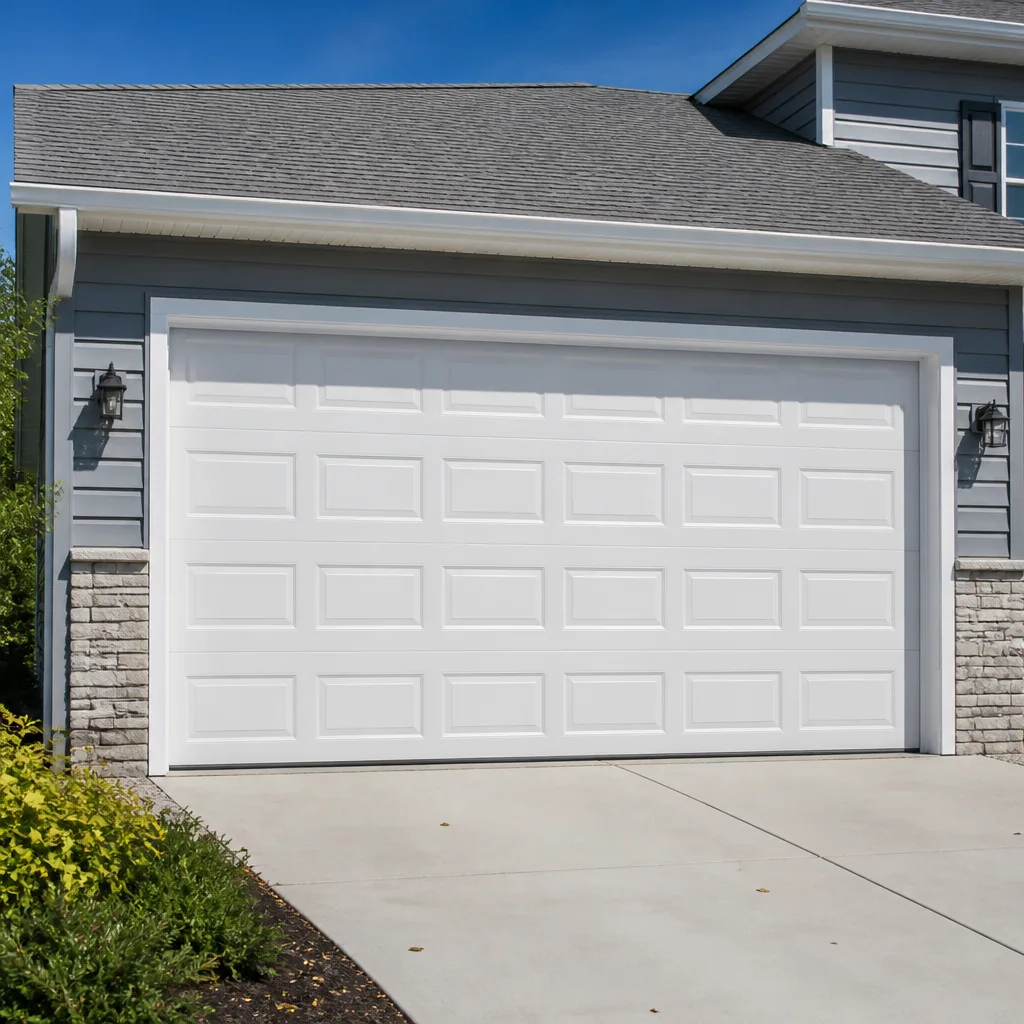 Raised-panel steel
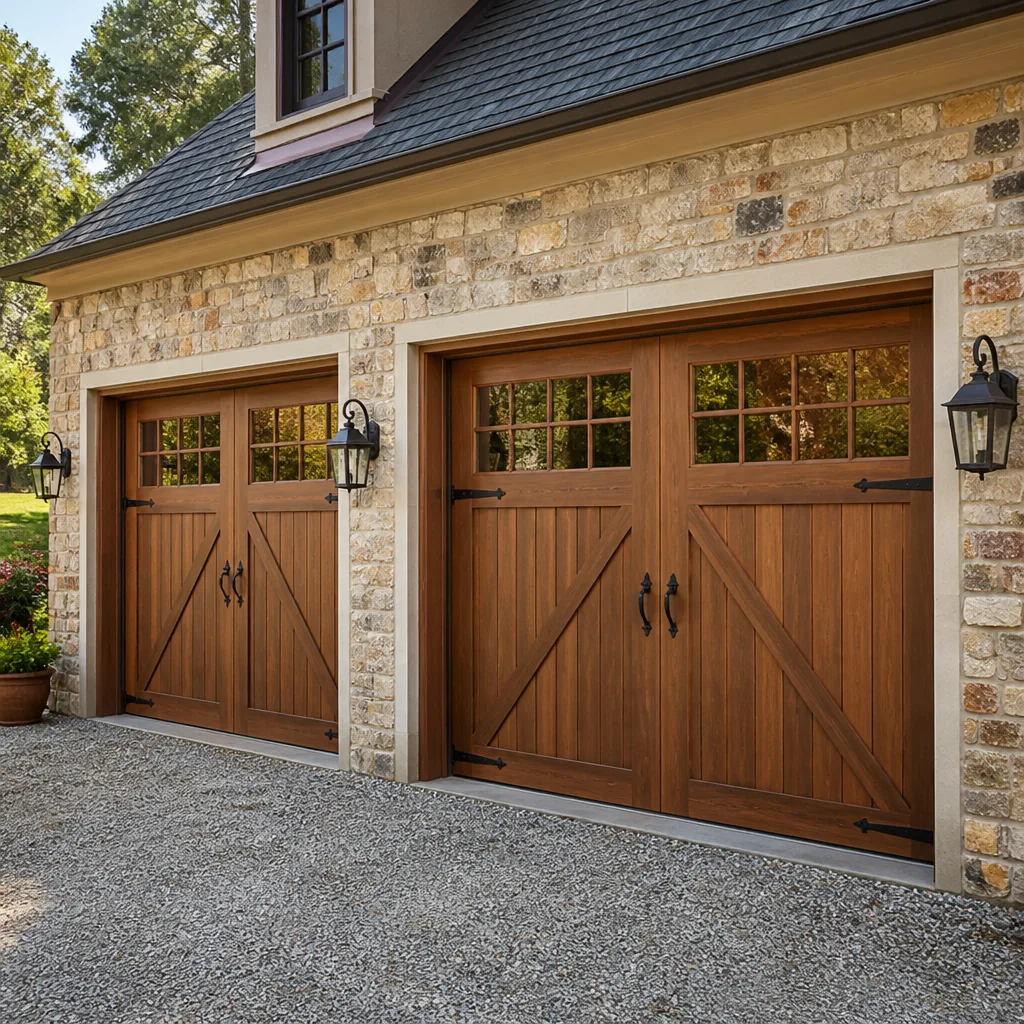 Carriage house
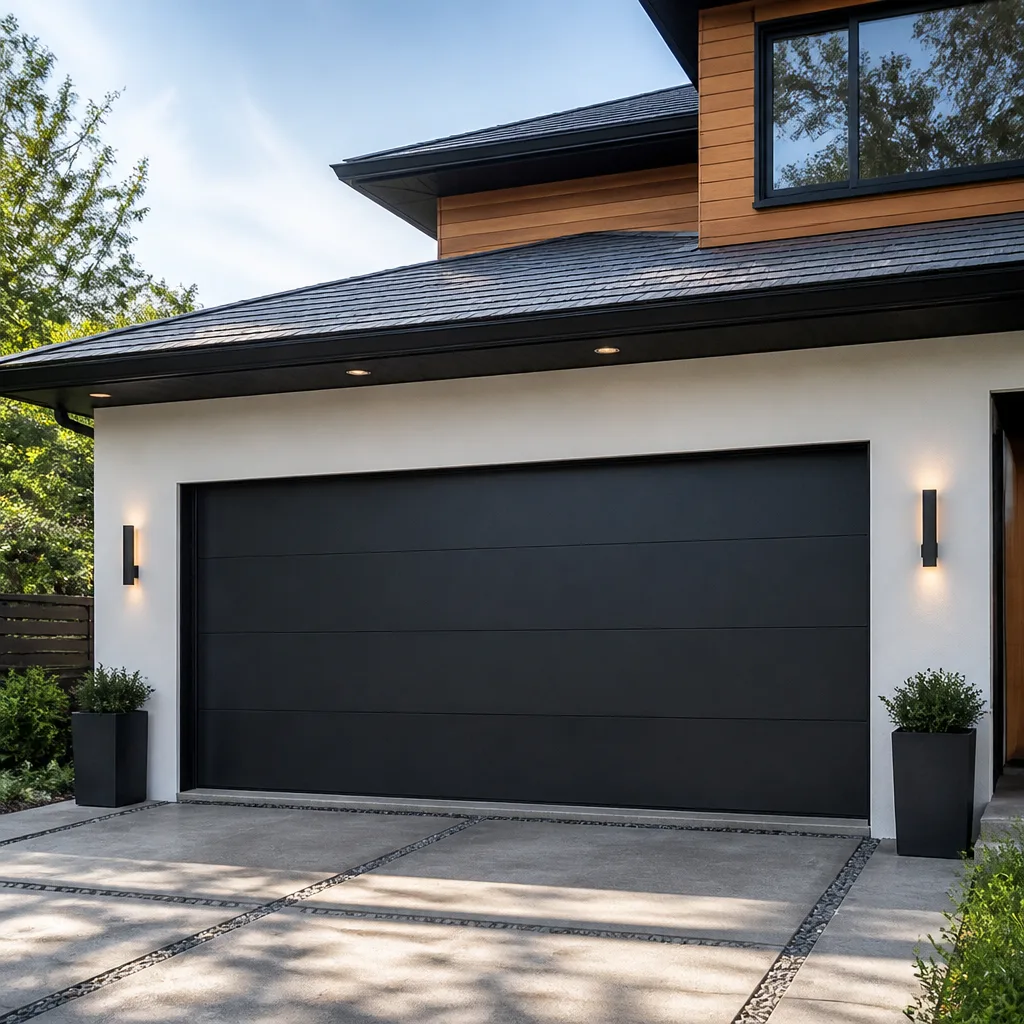 Modern flush
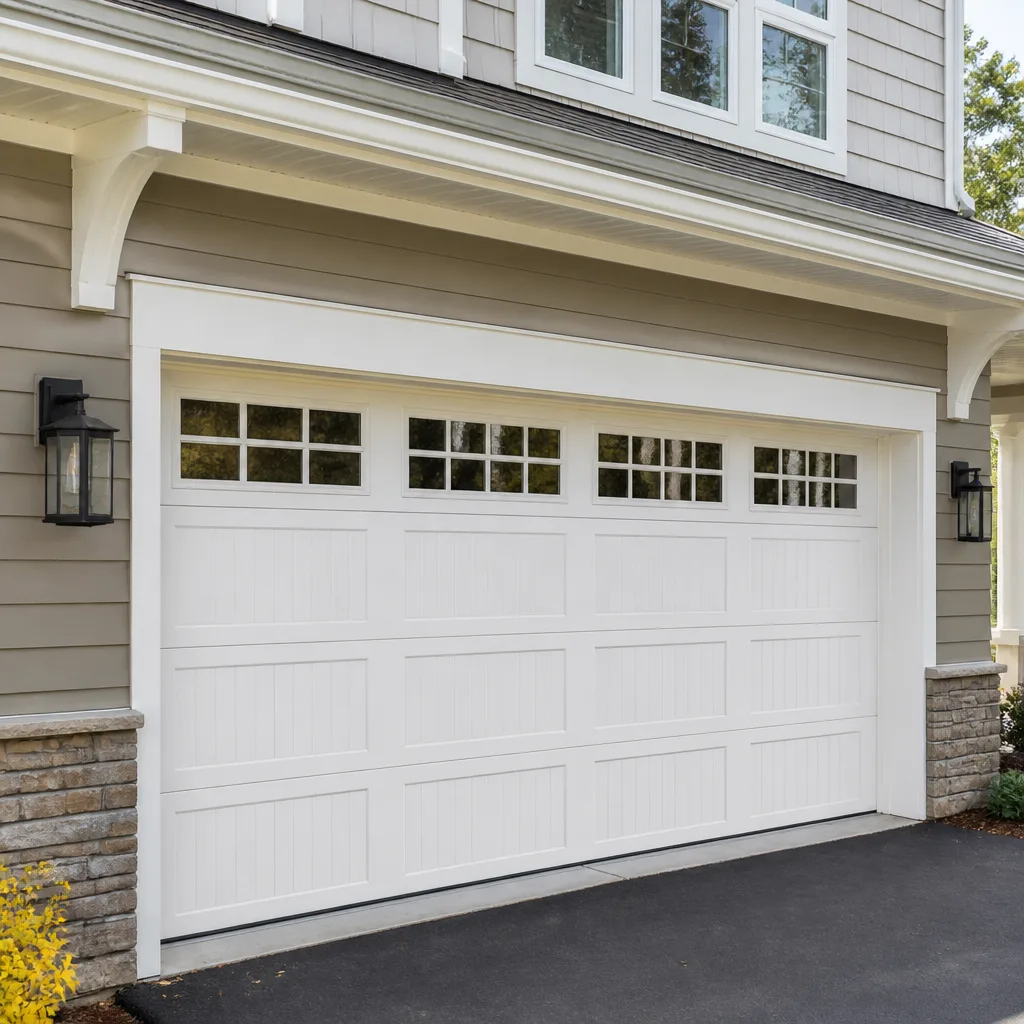
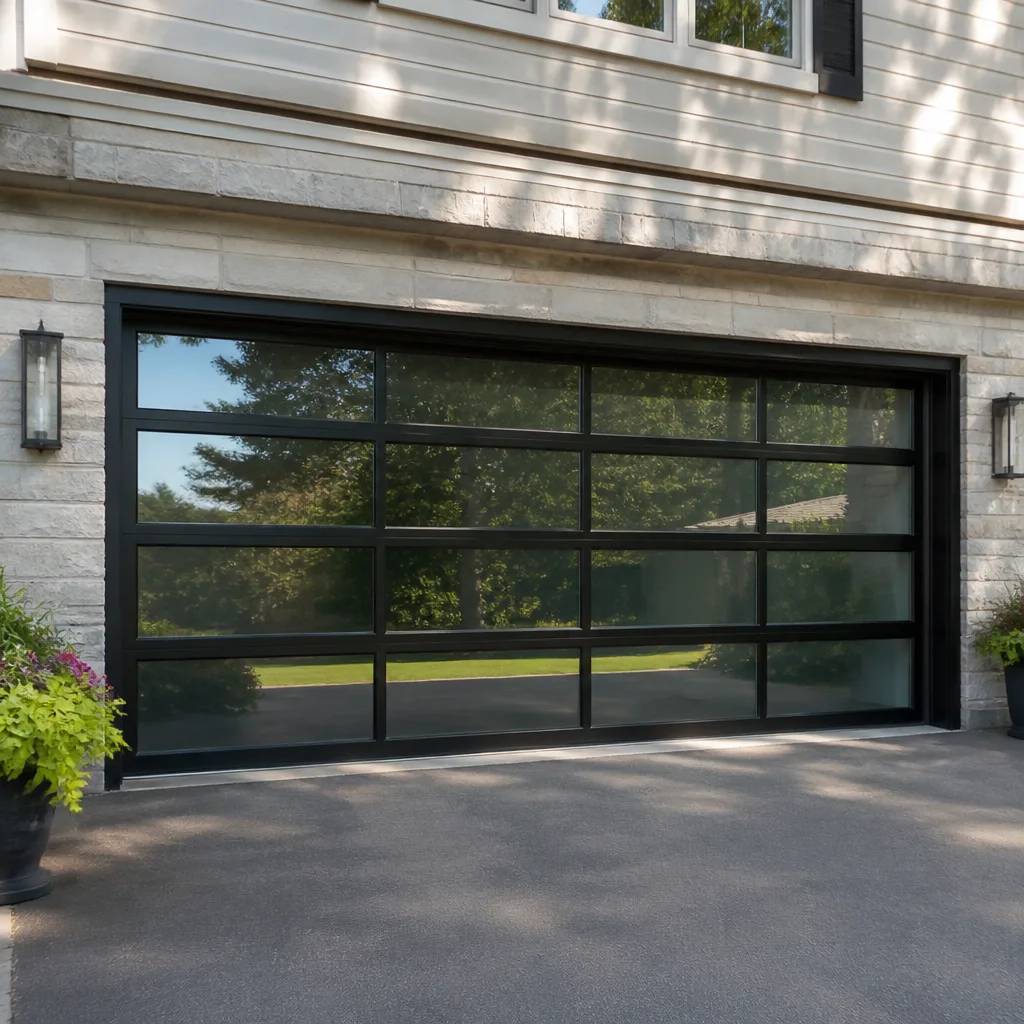 Full-view glass
 LiftMaster openers
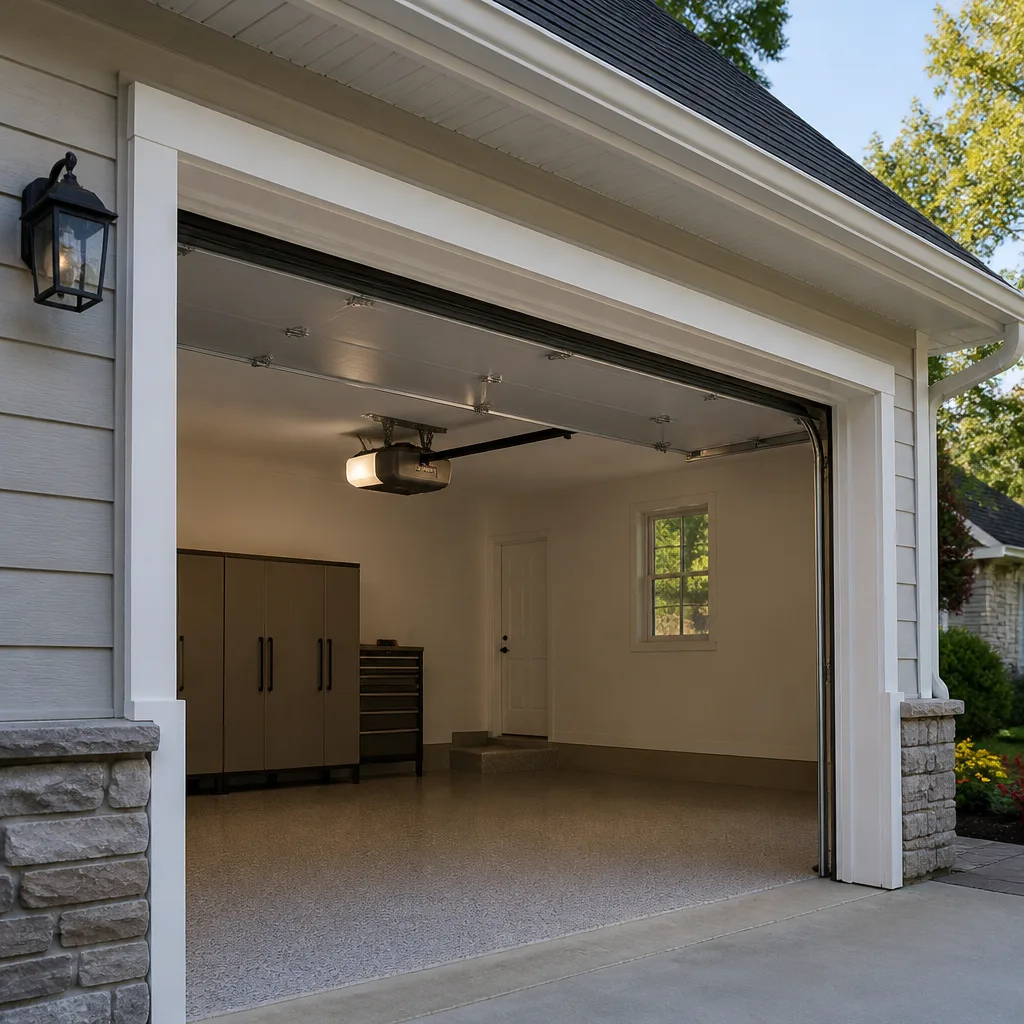 Chamberlain openers
Full 25-point door and opener safety check with every visit - springs, cables, rollers, tracks, and your LiftMaster or Chamberlain opener included
You get a price before we start. It does not change when the pro arrives.
Get your free estimateGarage Door Permits, Codes & Inspections in Conroe, TX: What You Need to Know
Most homeowners in Conroe assume a garage door is a private luxury with no code attached – you buy it, you hang it, done. The plumbing in the same house is inspected, the wiring is inspected, and the door that weighs more than a small car gets none of the scrutiny. That gap is where problems hide. A garage door is the largest moving object on your property and, in many homes here, the wall most exposed to heat, wind, and the daily back-and-forth of a full driveway. This guide walks through what actually triggers a permit in Conroe, what the code cares about, how inspections work, and what to check before you sign off on any install or replacement. It’s practical, not legal advice – pull the city into the loop for anything binding.
Quick Answer
In Conroe, a straight swap of a garage door onto the existing track and opener hardware generally doesn’t need a permit, but a structural change – new framing, a wider opening, a different header, or a brand-new door where there wasn’t one – usually does. Code compliance matters most on safety features like spring containment, opener reversal, and how the door is anchored, and those are checked at the install, not by the city. For anything you’re unsure about, call the City of Conroe building department before work starts. They’re the source of truth on your specific project.
Styles & brands we work with
- Raised-panel steel
- Carriage house
- Modern flush
- Full-view glass
- LiftMaster openers
- Chamberlain openers
Table of Contents
- When does a garage door project need a permit in Conroe?
- What codes apply to garage doors in Texas?
- How the inspection process usually works
- Replacement versus repair: which one triggers paperwork?
- How Conroe’s heat and storms affect codes and door choice
- Permits, HOAs, and deed restrictions in Conroe
- How to vet the installer or inspector
- What happens after inspection and final sign-off
When does a garage door project need a permit in Conroe?
You need a permit in Conroe when the garage door work touches the structure of the house – not just the door itself. If you’re replacing a door onto existing tracks and the opening stays the same width and height, most residential cases fall outside the permit trigger. If you’re cutting a new opening, changing the width, moving the header, adding a door where there wasn’t one, or altering the framing around it, that’s structural and the city wants to see it. A door swap that changes weight class or operating type is one you should confirm by phone; some jurisdictions want a permit for that, some don’t.
What usually triggers a permit in Conroe:
- Widening or shortening the garage opening
- Removing or adding a structural header above the door
- Converting a carport into an enclosed garage with a new door
- Adding a second door to a detached or attached structure
- Changes to the framing, sill, or jamb the door hangs on
- Electrical work that adds a new circuit for an opener
What usually doesn’t:
- Replacing the door panels onto existing tracks and hardware
- Replacing the opener with the same type and wiring
- Replacing a broken spring, cable, roller, or hinge
- Adjusting or replacing the safety sensors
The doors we install and repair around Conroe cross into both lists depending on the project. A straight Clopay swap on an older home is one kind of job. Reworking the opening for a wider door is another. Before anything is ordered, a call to the City of Conroe building department settles it in one conversation. Ask them two questions: does my specific address and project require a permit, and does it require a final inspection? Write down the answer and the name of whoever gave it to you.
What codes apply to garage doors in Texas?
Texas has no statewide garage door code that supersedes the local jurisdiction – Conroe adopts its own building codes, and the door is judged against those plus the manufacturer’s installation instructions. The code items that matter most on a residential door are the ones that keep people safe: spring containment, opener reversal, and proper attachment to the structure. Installers should be able to talk through each of these on any job in Conroe, and if they can’t, that’s a signal.
The core safety items a code-compliant residential door is built around:
- Spring containment – a broken torsion spring or extension spring must be contained or routed so it can’t fly into the living space. Torsion systems use a center bearing plate and a shaft that keeps the spring in place if it breaks. Extension springs use a safety cable that runs through the spring. Both matter here; a spring that breaks with no containment is a serious hazard.
- Opener reversal – the opener must reverse when it meets an obstruction. The two mechanisms are the pressure/sensitivity setting and the photo-eye safety sensors near the floor. Both get tested at the install.
- Emergency release – every automatic opener needs a manual release that works with the door’s weight while disconnected from the opener. This is tested during maintenance and inspection.
- Proper anchoring – the track, springs, and header brackets must be fastened to structure, not just to drywall or trim. On older Conroe homes with non-standard framing, this is where installs go wrong.
- Balance – a properly balanced door stays in place roughly halfway up when disconnected from the opener. An unbalanced door strains the springs, opener, and framing.
- Label compliance – rolling, sectional, and one-piece doors carry manufacturer labels and instructions, and the installation has to follow them as part of a code-compliant install.
If your home is in an older Conroe neighborhood where the garage was finished out after the house was built, assume nothing about what’s behind the drywall until someone looks. Springs, tracks, and anchors that passed muster on a builder-grade door in a different climate can sit on a wall that isn’t framed for them. Our technicians have up to 12 years of experience and see this most often on homes where the door was swapped without touching the hardware behind it.
How the inspection process usually works
Garage door inspections in Conroe are not a standard step on every project. They show up when the project touches structure, when the city asks for one as part of a remodel or new construction permit, or when the door is part of a larger scope of work. On a simple replacement, no city inspector shows up – the quality check is on you and the installer. On a project tied to a permit, the inspection is scheduled through the city and you want the installer present for it.
A typical sequence on a permitted Conroe project looks like this:
- Pre-inspection walk-through – the installer confirms the opening, framing, and header are ready before the door goes up. If the framing is off, this is the moment to fix it.
- Rough framing inspection (if applicable) – on new construction or an opening change, the framer’s work is inspected before the door and tracks are installed.
- Door installation – tracks, springs, door panels, and opener go in. Balance is set. Safety features are wired and tested.
- Final inspection – the city inspector checks the door, the anchoring, the opener safety features, and the labels. The installer should be on site to answer questions and demonstrate the reversal feature.
- Sign-off and close-out – you get the passed inspection record. Keep it with your house papers. It matters if you sell and it matters if you ever have a claim.
Two practical notes. First, ask for the inspection checklist or the code references at the time you pull the permit so there are no surprises at final. Second, get the inspection scheduled as early as the city allows; a final inspection delay is the most common reason a permitted door project drags. For a project already underway and stuck on a code question, we can look at the door itself and tell you what the inspector is likely to flag – Conroe Garage Door Repair Pros handles the door and hardware side of that conversation.
Replacement versus repair: which one triggers paperwork?
Repair almost never triggers a permit in Conroe. Replacement sometimes does. The dividing line is whether the work changes the opening, the framing, or the electrical circuit. A spring, cable, roller, or opener swap is maintenance and stays out of the permit system. A full door replacement onto the existing opening usually does not trigger it either, but it’s worth a call to confirm for your address. A replacement that changes opening size, door type (say, from a one-piece to a sectional with different track geometry), or framing is where the city gets involved.
Use this as a quick filter:
- Spring repair or replacement – no permit. This is the highest-risk repair on any door, and it’s the one we handle most often. If the door won’t lift and the opener just hums, the spring is the likely cause.
- Opener repair or same-type replacement – no permit. Same-type, same-wiring swap.
- New opener with a new circuit – the electrical portion may require a permit. Confirm with the city.
- Door panel replacement or track repair – no permit. This is repair work.
- Full door replacement, same opening – confirm with the city; often no permit, occasionally yes.
- Opening change, new opening, or framing change – permit required, and expect at least one inspection.
On a repair, the price you agree to is set by the written estimate before the wrench goes on the door. That’s the point of a written estimate: you know what the job costs and what it covers before anyone starts. If a repair reveals a systemic problem – say, an opener that’s been masking a failing spring and out-of-true tracks – you’ll hear it as an option, not a bill. A repair turning into a replacement is a decision, not a surprise.
How Conroe’s heat and storms affect codes and door choice
Conroe summers are the real driver of garage door wear and, indirectly, of what code-compliant installation looks like here. Long stretches above 90 degrees and afternoon sun on an east or south-facing door speed up panel fade, dry out the grease in the tracks and rollers, and stress the springs and opener motor more than a mild climate would. That’s not a code issue on its own, but it’s why the door’s installer needs to think about sun exposure, ventilation, and insulation on a new install – not just the opening dimensions.
Storm exposure matters too. Conroe sits in a part of Texas where hail and high wind are regular events, and the garage door is typically the largest unreinforced opening on the house. On a new door, ask what the manufacturer’s wind-load rating is for the specific model and whether the door can be reinforced with a manufacturer-approved bracing kit. Those are the numbers that matter if you’re ever filing a claim, and the door label carries them. A code-compliant install includes whatever the manufacturer requires for the door to hold that rating.
Three things to check on any new door in Conroe:
- The wind-load rating on the door’s specification sheet, and whether the door needs a reinforcement kit to get there
- Insulation value for an attached garage, since a hot garage pushes heat into the house through the shared wall
- Sun exposure on the door face and whether the panel color and finish are meant to hold up in direct Texas sun
On an existing door, the routine maintenance that keeps a Conroe door code-compliant and safe is the same year to year: spring and cable check, opener reversal test, photo-eye test, balance test, and a look at the anchors and track fasteners. Springs and cables are under extreme tension. This isn’t a DIY job, and it’s exactly the kind of work where a trained technician is the right call every time. We don’t recommend a homeowner go near a torsion spring; if it’s broken, the door stays closed until someone qualified is there.
Permits, HOAs, and deed restrictions in Conroe
The city permit and the HOA are two separate gates on a garage door project in Conroe, and passing one does not pass the other. The city cares about structural safety and code. The HOA or deed restriction cares about color, style, panel window patterns, and sometimes door height or material. A permit number doesn’t override the deed restriction, and an HOA approval doesn’t waive the permit. Assume you need both and start both early.
For a door replacement, the HOA piece usually looks like this:
- Pull the current architectural or design guidelines for your subdivision before you shop for a door.
- Note the required colors, panel styles, and window options – some Conroe subdivisions require a specific panel style to keep the streetscape consistent.
- Submit the door spec sheet, showing the model, color, and any window options, with the approval request.
- Wait for written approval before ordering. A door that shows up in the wrong color is not a door the installer can install and still pass the HOA review.
- Keep the approval with the permit and the final inspection record for the life of the door.
Older Conroe neighborhoods often have deed restrictions that predate the current HOA, or a subdivision that never set one up. It’s worth knowing which applies at your address. If the door is being replaced after storm damage, the HOA may have a different process for a like-for-like replacement than for an upgrade; ask the HOA board that question directly. The installer’s job is to install the door the record allows, not to interpret your deed restriction for you.
How to vet the installer or inspector
There’s no state-level garage door inspector license in Texas, so the person doing the work is the primary quality control. The practical move is to vet the installer the same way you’d vet any licensed trade: ask what brands they’re factory-familiar with, ask what their safety process is on springs, and ask for a written estimate with the door model and safety hardware listed. An installer who can talk through spring containment, opener reversal, and the specific hardware they’re using knows what code compliance looks like on a door.
What a strong installer brings to a Conroe project:
- Brand familiarity – being fluent in a specific set of brands (LiftMaster, Chamberlain, Genie, Clopay, Amarr, Wayne Dalton, Craftsman, Raynor, for example) means the diagnostics and the install follow that brand’s instructions, not a generic guess. If the door or opener on the house is a LiftMaster or a Chamberlain, the install should reflect that system’s requirements.
- A written estimate – model numbers, hardware, labor, and a clear scope. The written estimate sets the final price; if the number isn’t in writing, it isn’t the price.
- Spring and opener specialization – spring work and opener diagnostics are the two highest-skill parts of the job. An installer who names spring repair as a service and can talk through the testing sequence for the opener is telling you where their competence sits.
- Clean-up and close-out – the packaging leaves with them, the safety test happens with you watching, and you keep the door’s documentation.
Questions worth asking any installer on a Conroe job:
- Does this specific project require a permit, and are you pulling it or am I?
- What wind-load rating does this door carry, and does it need a reinforcement kit to hold it?
- What’s the spring containment method on this door?
- How do you test opener reversal and the photo-eye at close-out?
- What’s in the written estimate, and what happens if the door arrives wrong or the opening isn’t ready?
Our technicians have up to 12 years of experience working on the eight brands we’re set up for. If the quote they hand you doesn’t name the door model, the hardware, and the safety items, ask for it again in writing before anything is ordered.
What happens after inspection and final sign-off
The final sign-off on a permitted garage door in Conroe is the end of the paperwork and the start of the ownership side of the door. You should walk away with the passed inspection record, the permit close-out, the manufacturer’s documents for the door and any opener, and a written note on what to check month to month. If the door is under a manufacturer’s warranty, the installer should give you the registration path and the serial numbers. Keep all of it with the house file; a home sale, an insurance claim, or a future repair all run through those papers.
Day-to-day, the maintenance rhythm on a Conroe door is simple:
- Test the opener’s reversal feature and photo-eye once a month – a quick visual and a physical test
- Listen for a change in the door’s sound; a new rattle or groan is usually a roller, a track, or a loose fastener
- Watch the door’s balance if it starts to feel heavy or won’t stay partway up on manual release
- Call a technician at the first sign of a spring or cable problem – do not open the door on a broken spring
- Keep the tracks clean and clear of debris; skip the grease on the tracks themselves
If anything is off after a permitted install, call the installer back before the warranty window closes. The inspection covers the install, not the years after, and a problem in the first weeks is usually an adjustment, not a new door.
Common Mistakes to Avoid
- Skipping the city call because a neighbor didn’t get a permit. A neighbor’s project is not a precedent for yours. Two homes on the same street in Conroe can have different zoning, different deed restrictions, and different requirements depending on when they were built. Make the call for the address you’re working on.
- Ordering the door before the HOA approves it. A door that matches the manufacturer spec but not the design guideline for your subdivision can end up as an installed door the HOA asks you to remove. Submit the color and panel style first, and wait for the written approval.
- Assuming the permit covers the opener. The permit is about the structural side of the door. If an electrician has to add a circuit for the opener, that electrical work is its own scope of the project and gets pulled separately. Ask who’s pulling it.
- Not knowing the wind-load rating on a new door. In a part of Texas where storms are routine, the rating and the bracing kit are the details that matter after a storm. Get them in writing from the manufacturer’s spec sheet for the model on the house.
- Treating a broken spring as a DIY repair. Springs and cables are under extreme tension and can cause serious injury. This is the repair where an experienced technician matters most; on a Conroe door, that’s a same-day call when there’s a real opening.
- Throwing out the final inspection record. The close-out paperwork is part of the house. Losing it can complicate a sale or a claim years later. Keep the permit, the inspection record, and the door’s documentation together.
- Assuming the door and the opener are the same scope. They aren’t, and the safety features are different. The opener has an electrical and diagnostic side; the door has a structural and spring side. Get both written into the estimate so the installer can’t split one job into two prices later.
See the difference
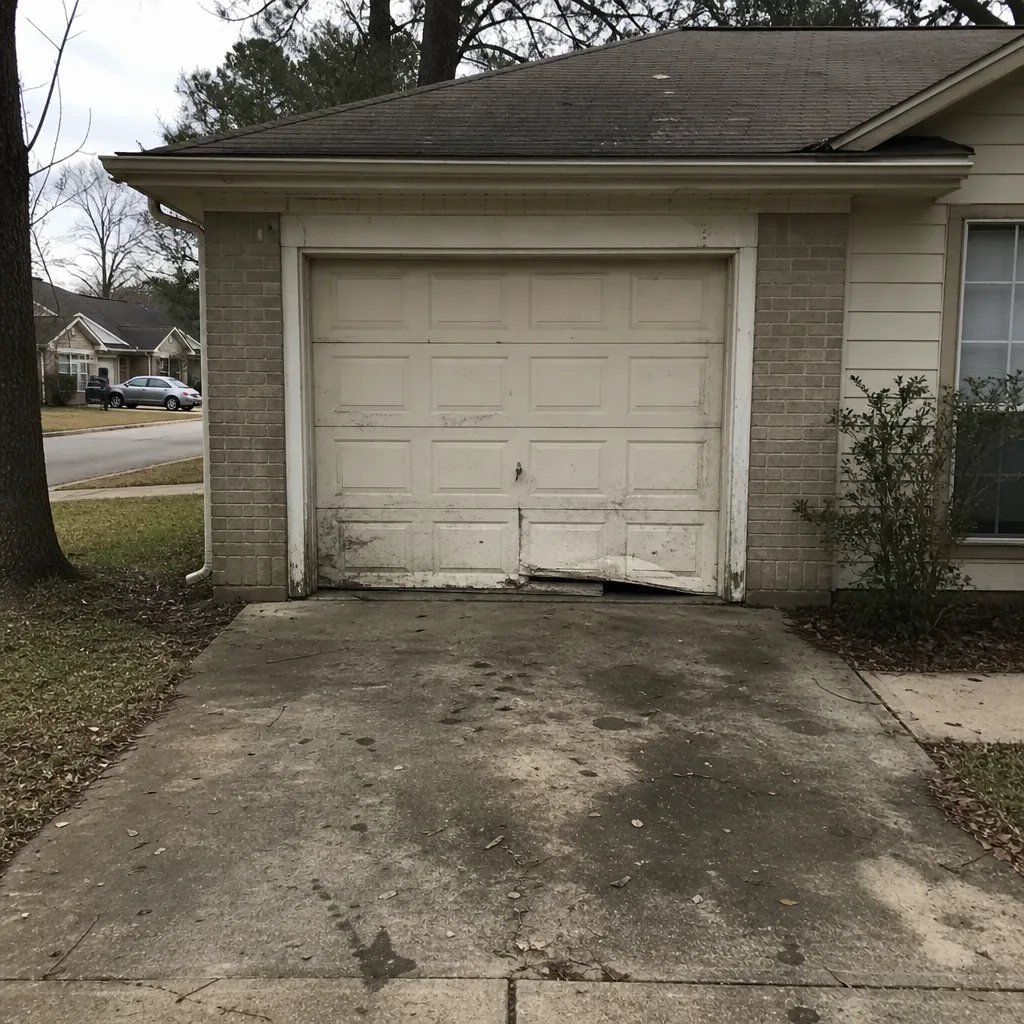 Before
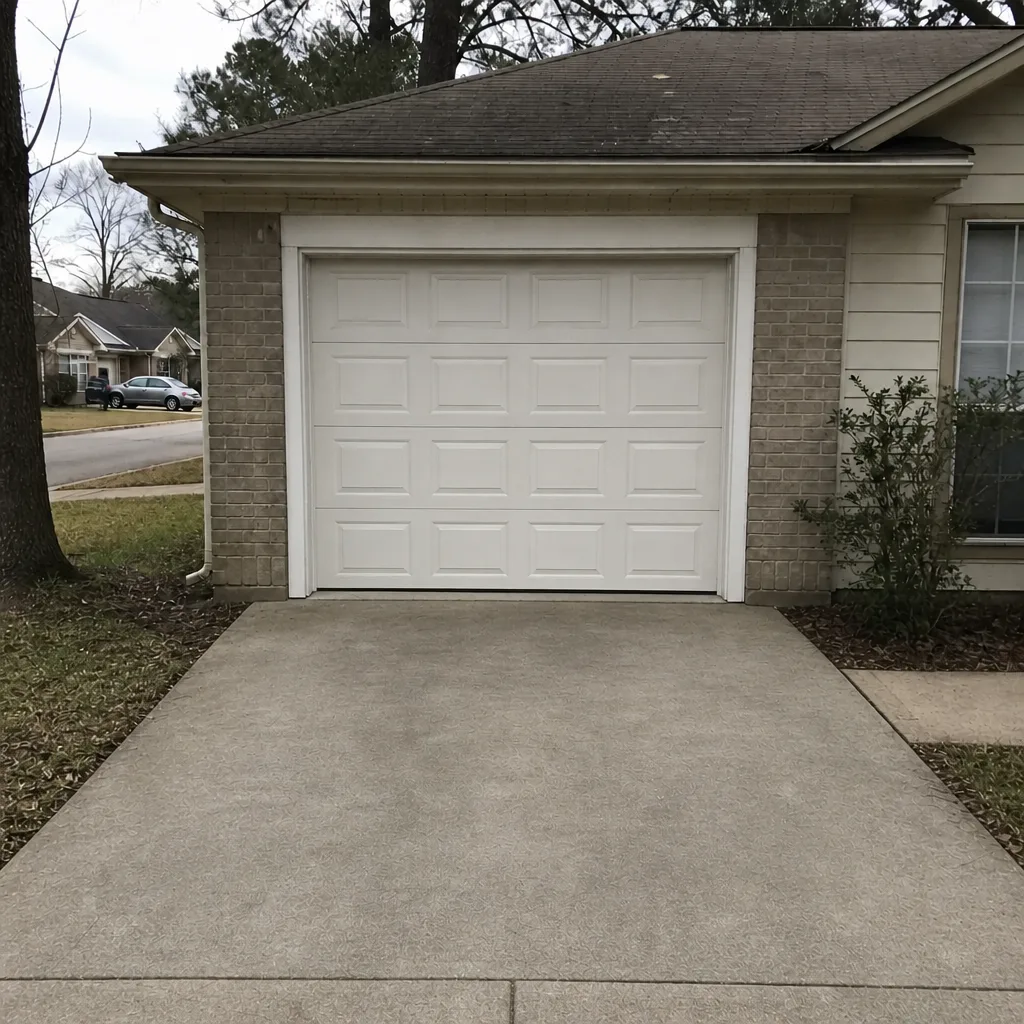 After
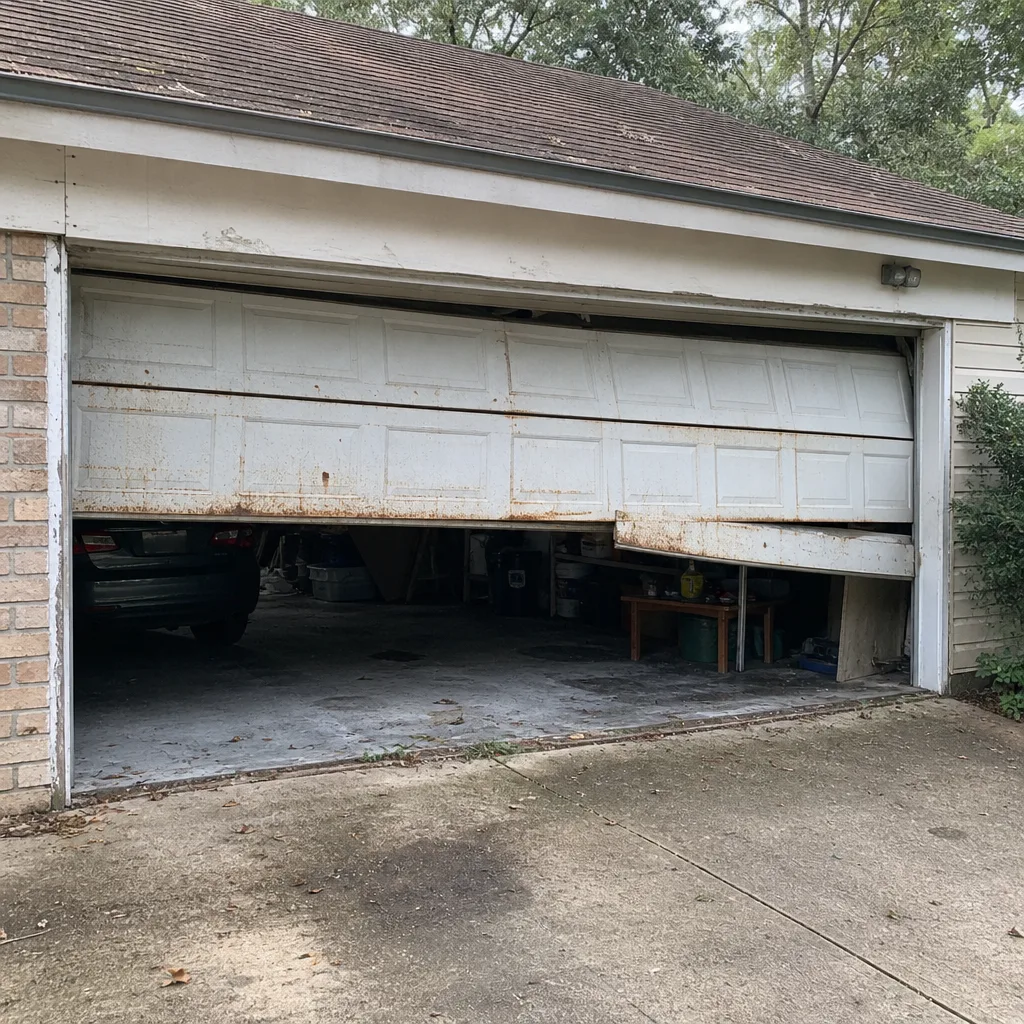 Before
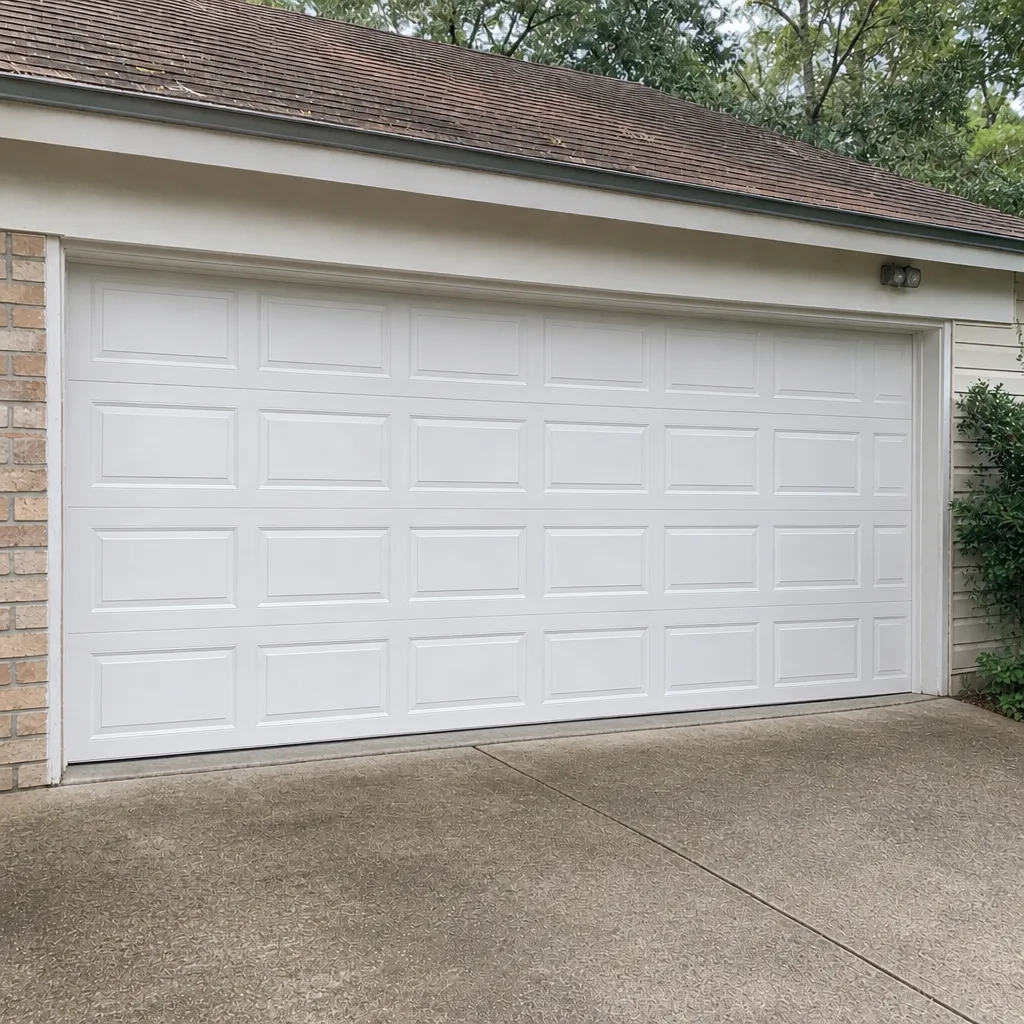 After
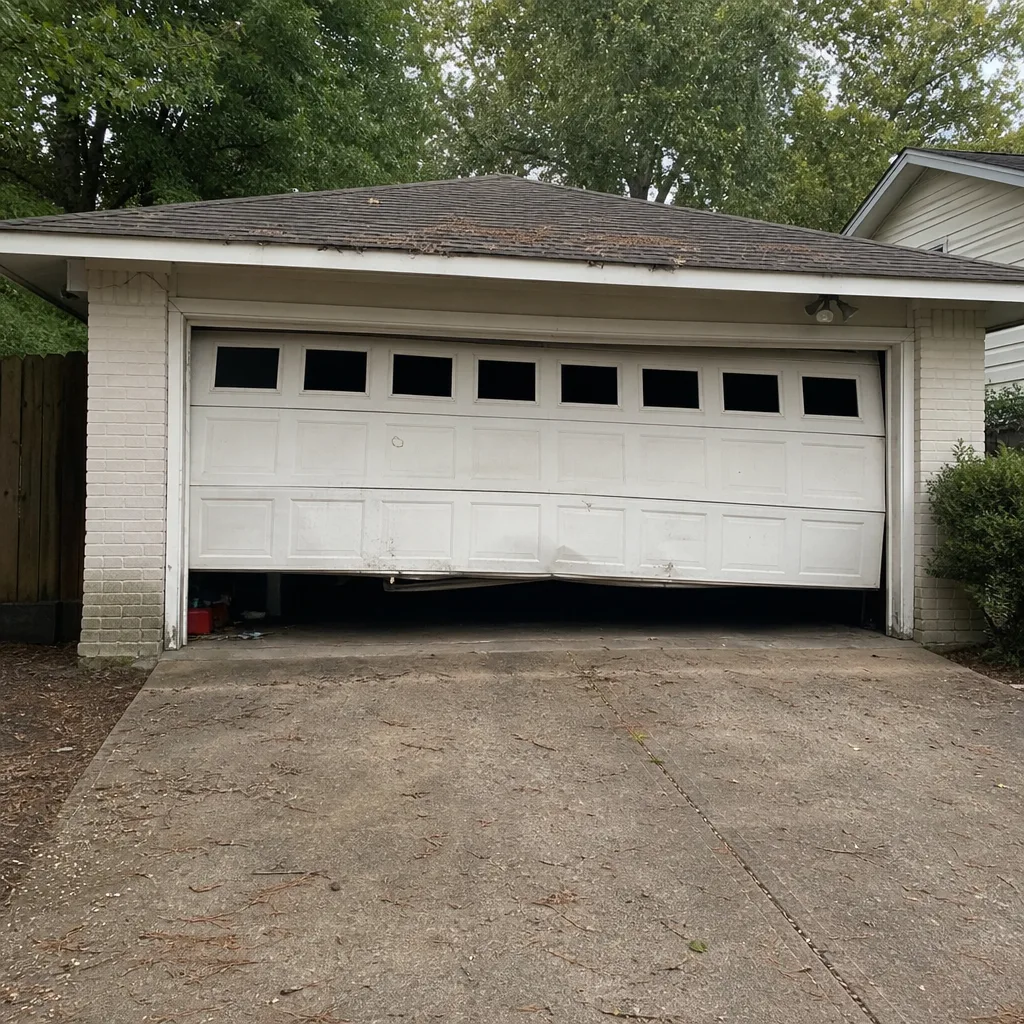 Before
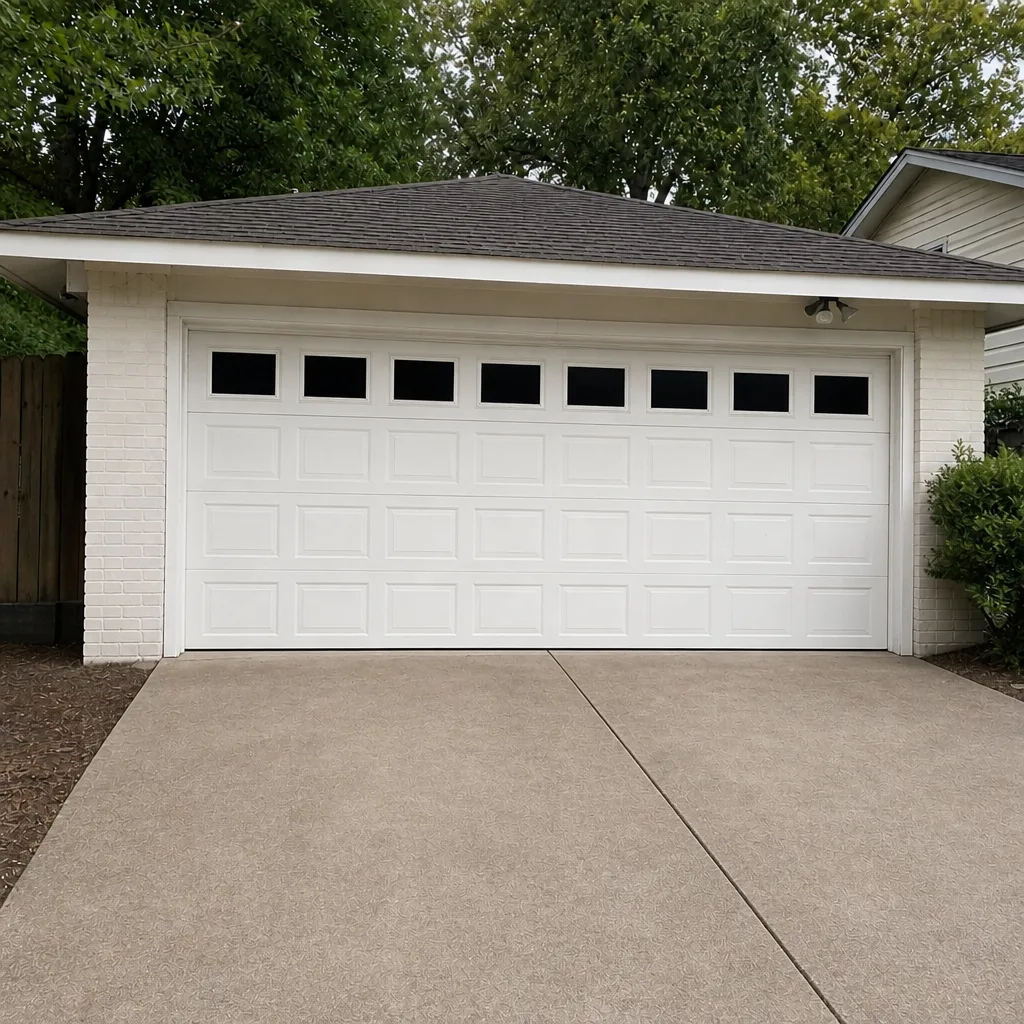 After
When to Call a Professional
Call a professional before you touch the door if any of these are true: the door won’t open, the door won’t close, the spring is broken or visibly bent, the door is noticeably heavier than usual, the opener reverses or stops partway for no obvious reason, the safety sensors have a light off, or the door is off its track. On the structural side, call before ordering anything if the opening needs to change, the framing around it is questionable, or the door is part of a larger addition or remodel. Those are the cases where the permit question needs answering first. If you’ve had a storm and the door took a hit, a professional should look at the door, the springs, and the opener together before anything is ordered.
Conroe Garage Door Repair Pros offers free estimates in Conroe. Call (877) 362-9173 to book a technician. We answer 24/7. Fast dispatch, 7am-7pm, Sunday through Friday. Same-day service when a door needs it. The price is per job, set by the written estimate before any work starts, and we’ll tell you straight whether the project has a permit question your city needs to answer before the work begins.
Frequently Asked Questions
Often no, if the new door goes onto the existing opening, tracks, and hardware without changing the framing. A permit is usually required when the opening changes, the header or framing is modified, a door is added where there wasn’t one, or electrical work is part of the job. Call the City of Conroe building department with your address and project scope – that call settles it. Call (877) 362-9173 for a free estimate on the door side of the project.
Texas doesn’t set a single statewide garage door code; the local jurisdiction – Conroe for homes here – adopts its own building codes, and the installer follows those plus the manufacturer’s installation instructions. The main items are spring containment, opener reversal, emergency release, proper anchoring to structure, and balance. The door’s label and the install instructions are what a code-compliant install is judged against.
Not usually on a straight replacement onto an existing opening. A city inspection is typically part of a permitted project – opening changes, framing work, new construction, or a remodel that touches the door – and the installer should be there for it. If your project has a permit, ask the city for the inspection checklist when you pull the permit so nothing on the list is a surprise at final.
It depends on the installer and the scope. On a structural project, ask before the estimate is signed who is pulling the permit and who is present for the inspection. Some installers pull the permit as part of the job; some projects have the homeowner or general contractor handle it. Get the answer in writing, along with the written estimate, so the responsibility is clear before anything is ordered.
We don’t recommend it. A garage door is the largest moving object on a house and the spring system is under extreme tension – a torsion spring or a cable under load can cause serious injury. Add the electrical side of the opener, the framing side of the opening, and the inspection questions, and the DIY version of a Conroe replacement gets expensive in the wrong ways. The estimate is free; call (877) 362-9173 and we’ll tell you what the job actually involves.
The inspector will list what needs to change – a missing reinforcement kit, an opener setting that needs adjusting, an anchor that isn’t into structure, or a label that isn’t on the door. The installer corrects it and the inspection is rescheduled. This is why the installer should be present at final: fixing an inspection item is usually a small job when the right person is on site and can hear the finding firsthand.
The Bottom Line
Permits and codes on a Conroe garage door come down to two questions: does the project change the structure or the opening, and does it touch the electrical system? If either answer is yes, call the City of Conroe building department before you order. If the answer is no on both, the job still lives or dies on the safety details – spring containment, opener reversal, anchors into structure, and balance. The HOA or deed restriction is a separate gate, and it’s worth opening early. Get the written estimate, keep the inspection paperwork, and call a specialist when the door is heavy, stuck, or on a broken spring. That’s the whole of it.
Ready to get the door handled? Call (877) 362-9173 for a free estimate. We answer 24/7. Fast dispatch, 7am-7pm, Sunday through Friday. The price is quoted and agreed before any work starts, and the written estimate is the price you pay.
Written by the team at Conroe Garage Door Repair Pros.