
Last updated November 20, 2026
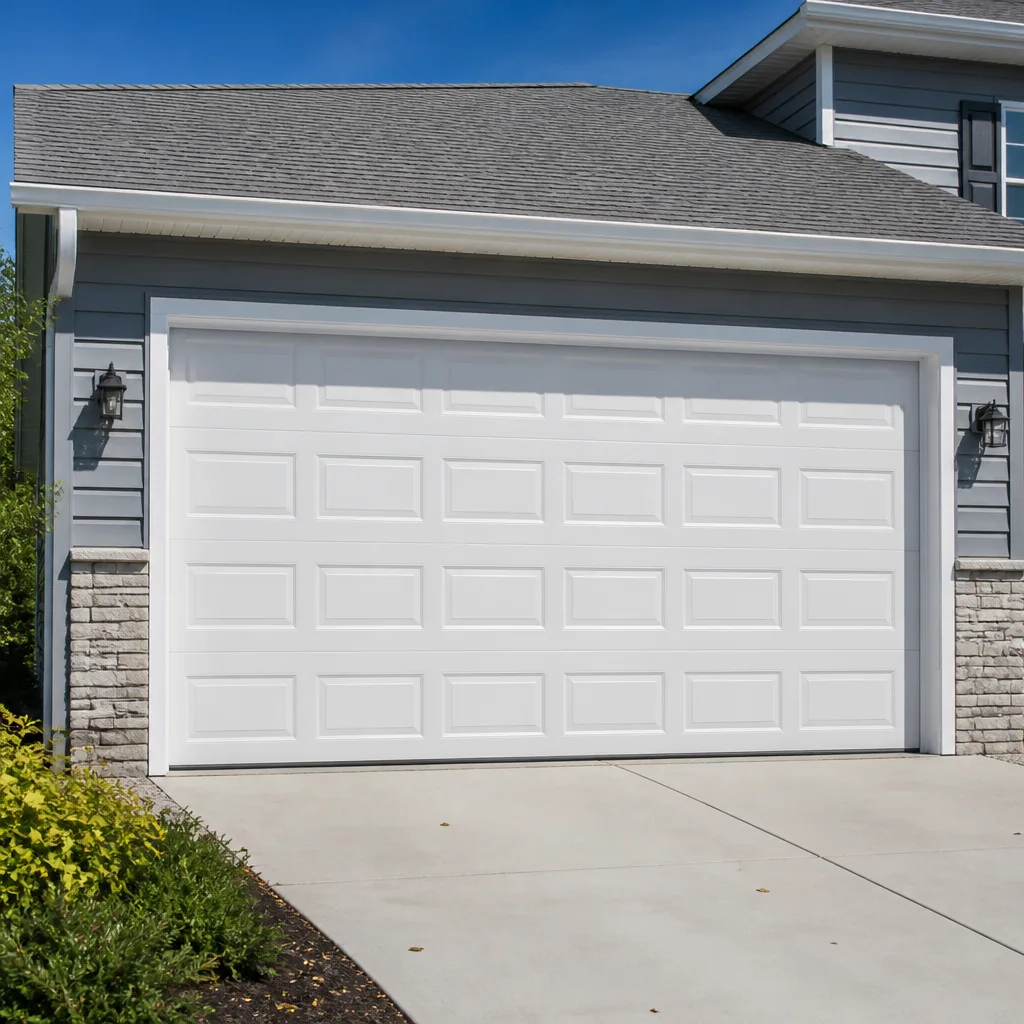 Raised-panel steel
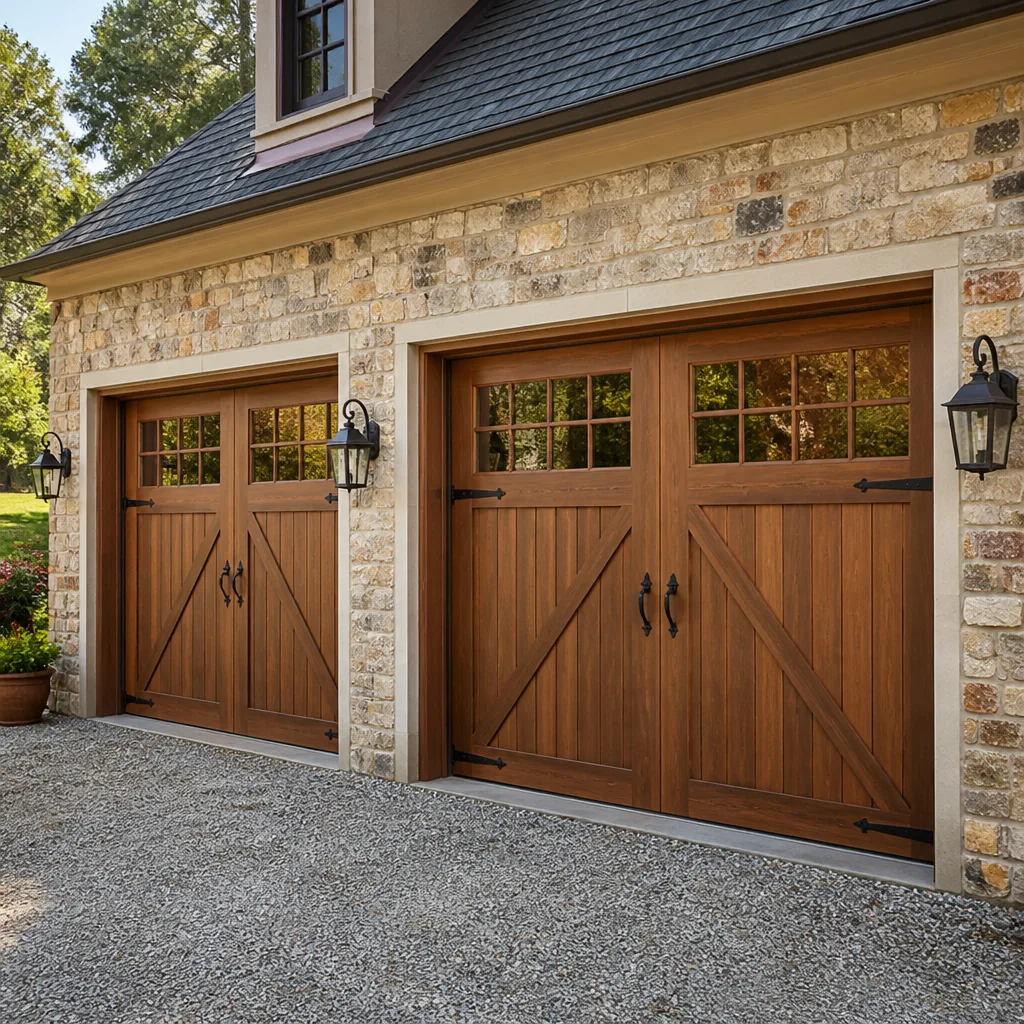 Carriage house
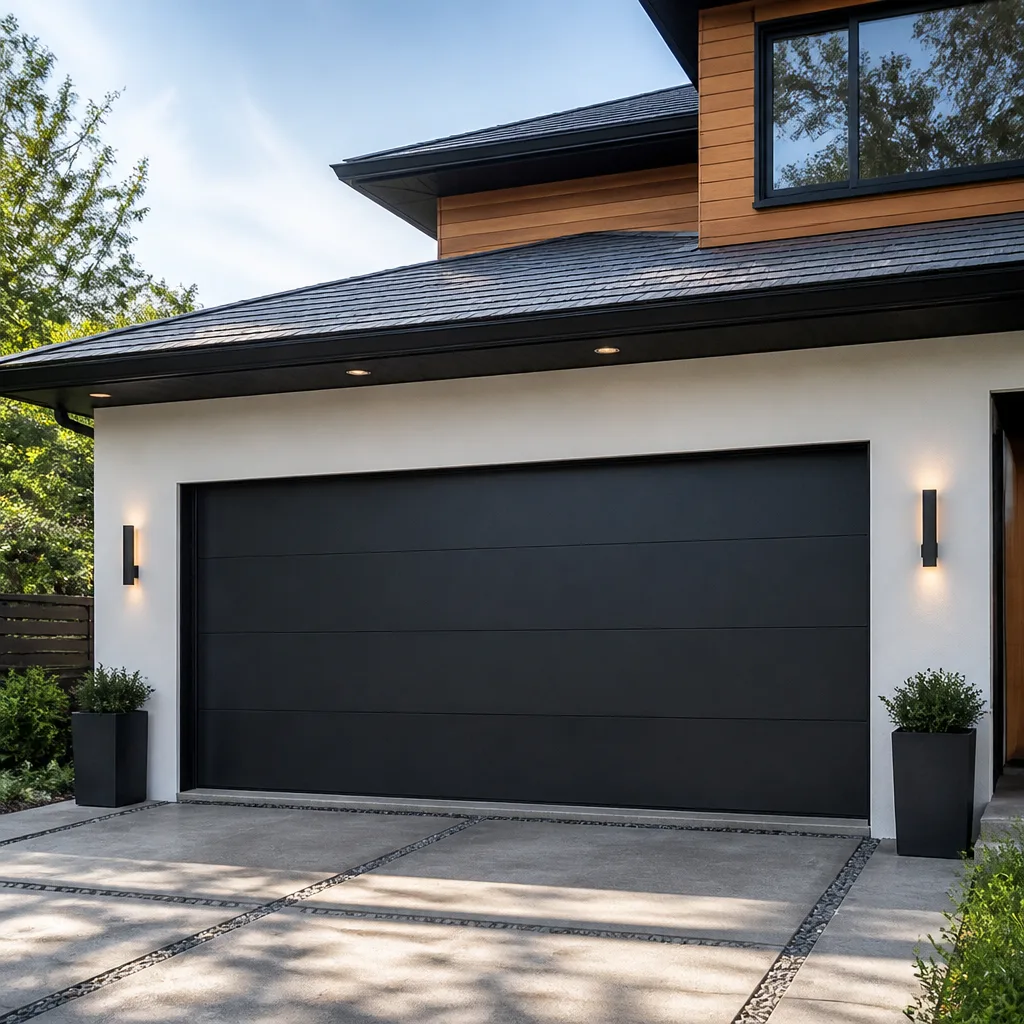 Modern flush
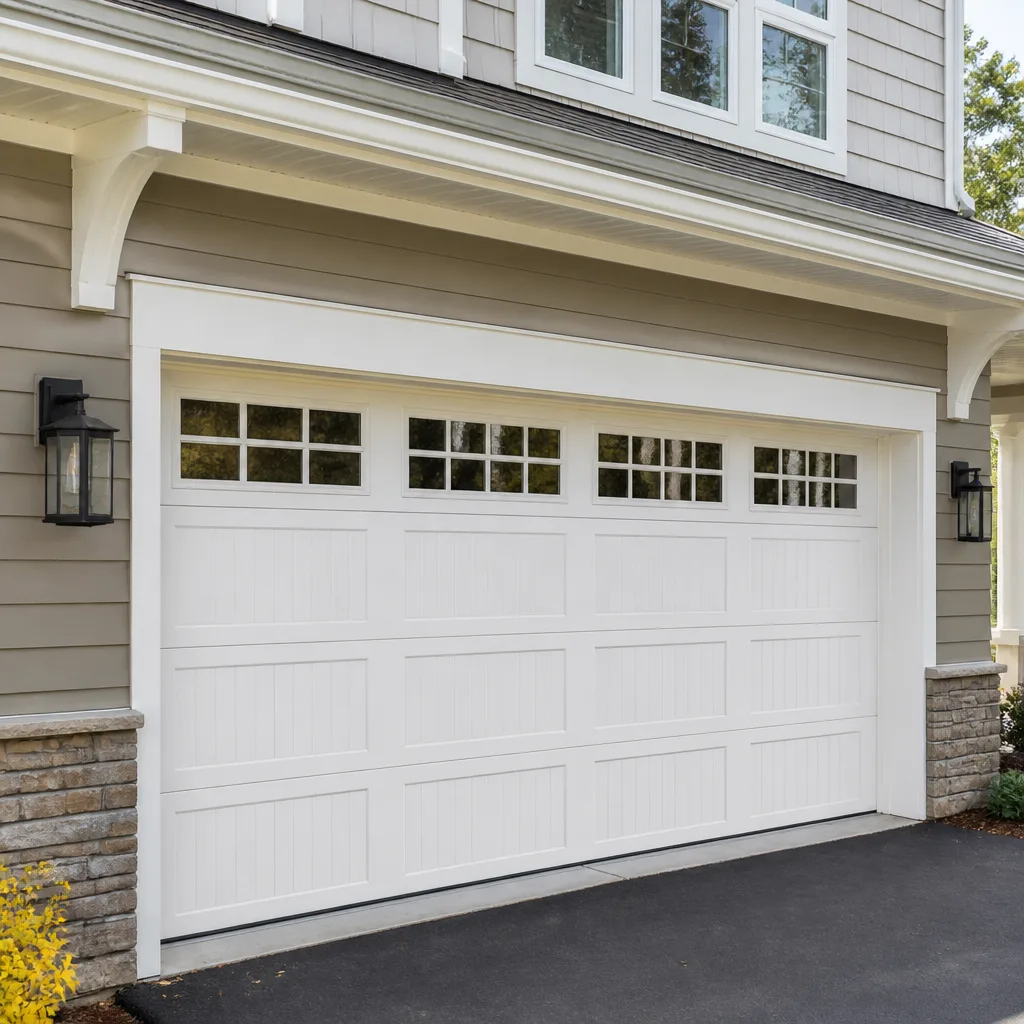
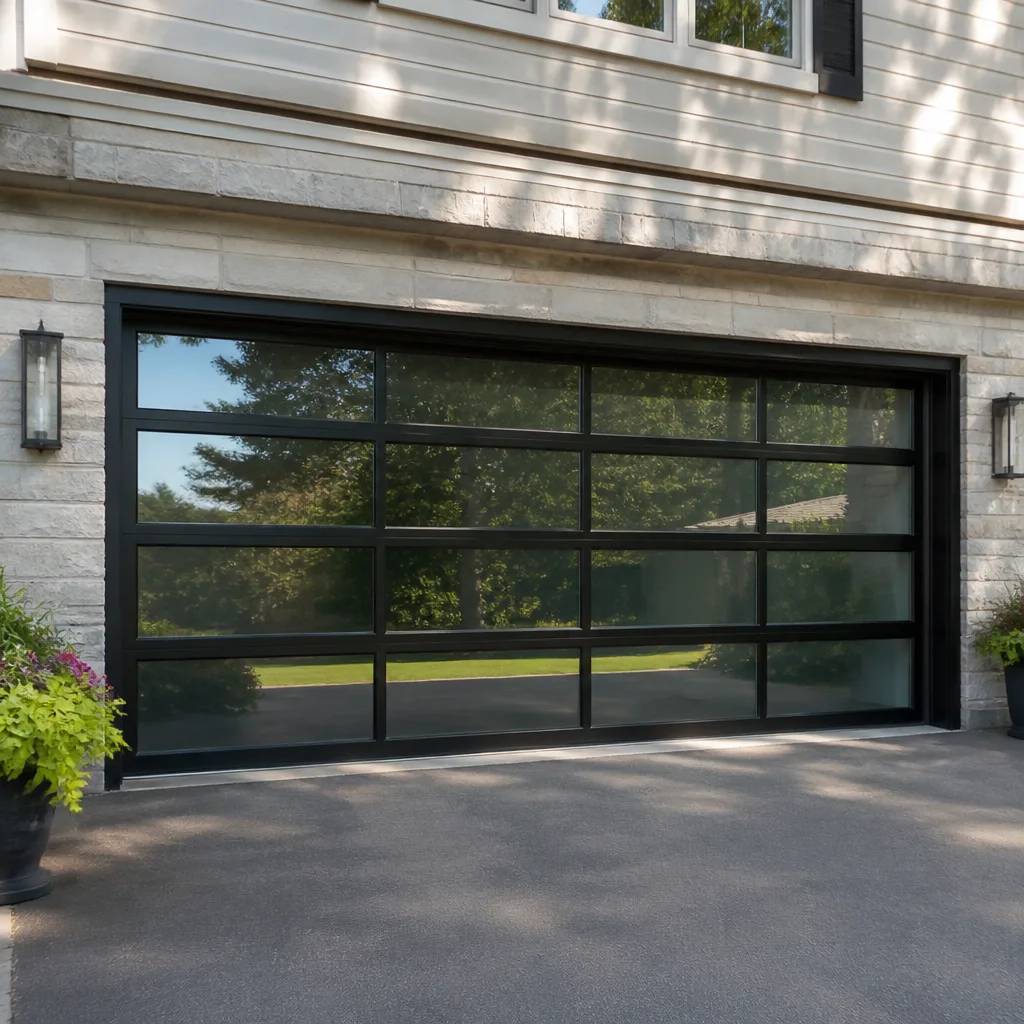 Full-view glass
 LiftMaster openers
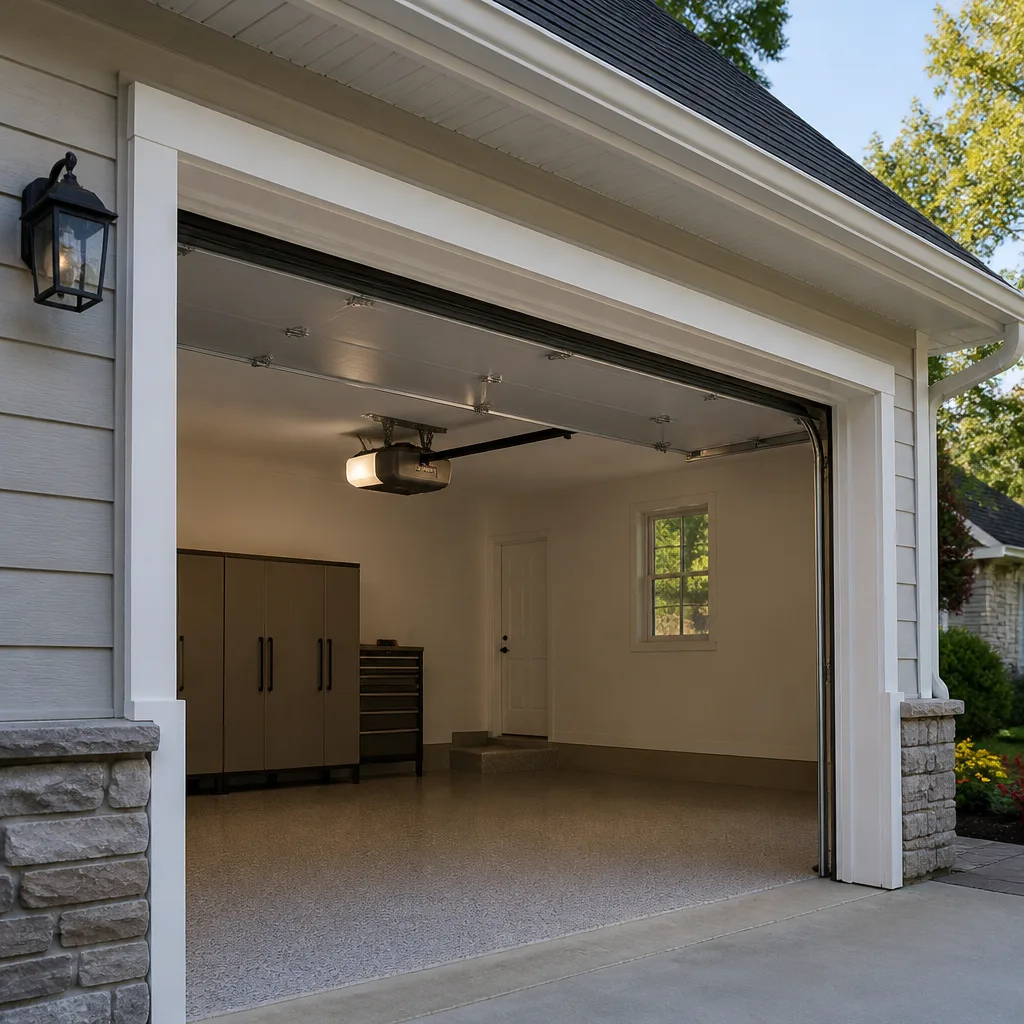 Chamberlain openers
Full 25-point door and opener safety check with every visit - springs, cables, rollers, tracks, and your LiftMaster or Chamberlain opener included
You get a price before we start. It does not change when the pro arrives.
Get your free estimateThe Complete Guide to Garage Doors in Conroe
Most garage door problems are misdiagnosed before anyone lifts a wrench. Homeowners hear a grinding noise or watch a door reverse halfway down and assume the opener is failing, when the real culprit is often a tired spring, a bent track, or a photo-eye knocked out of alignment. That matters because replacing an opener that wasn’t broken is money you didn’t need to spend, and the actual problem stays in place. This guide walks through how a garage door system works, what each failure sounds and looks like, what repair versus replacement really means for a Conroe home, and how to get an honest diagnosis the first time. We’ll cover springs, openers, panels, tracks, and the brand specifics that come up again and again.
Quick Answer
A Conroe garage door system has four moving parts that fail most often: springs, cables, rollers and hinges, and the opener. Springs and cables are the dangerous ones and should always go to a trained technician, since they’re under extreme tension. Most everyday repairs – a snapped spring, a stripped opener gear, a door off its track – are resolved in a single visit once the right part is on hand, and a full replacement is usually the better call only when the door itself is structurally failing or you’re upgrading for insulation or a modern opener.
Styles & brands we work with
- Raised-panel steel
- Carriage house
- Modern flush
- Full-view glass
- LiftMaster openers
- Chamberlain openers
Table of Contents
- How a Garage Door System Works
- Springs: The Part Most People Get Wrong
- Openers: Why Brand Knowledge Matters
- Repair vs. Replacement: How to Decide
- What a New Garage Door Installation Involves in Conroe
- Conroe-Specific Considerations
- Ongoing Maintenance You Can Actually Do
- What Garage Door Work Typically Costs
How a Garage Door System Works
A sectional garage door isn’t one machine – it’s a set of systems that have to work together. There’s the door itself (panels, hinges, rollers), the counterbalance (springs and cables), the track, and the opener. When one part goes, the others absorb the strain, which is why a single worn roller can eventually chew through a whole hinge line. Understanding the parts helps you describe the problem accurately when you call, and it helps you tell a real diagnosis from a guess.
Here’s the basic anatomy, top to bottom:
- Springs – torsion (mounted on a shaft above the door) or extension (mounted along the sides). They do most of the lifting work; the opener just guides the door.
- Cables – run from the bottom corners up to the spring system and hold the door’s tension in check.
- Track and rollers – the door’s rails and wheels. Rollers wear out quietly; bent track is usually a collision symptom.
- Hinges and panels – the joints and sections of the door. Hinges at the bottom and middle take the most abuse.
- Opener – the motor, rail, and drive mechanism (chain, belt, or screw). It also carries the safety reverse system (photo-eyes) that stops the door if something is in the way.
- Weather seal – the rubber strip at the bottom and the perimeter seal. In Conroe, the bottom seal is what keeps heat, humidity, and insects out of the garage.
When a door won’t open, the question we start with is simple: is the opener running but the door not moving, or is there no motor sound at all? That one answer splits the diagnosis in half. If the opener hums but the door stays put, the problem is usually the drive gear, the spring, or a locked door. If there’s silence, it’s the motor, the power supply, or the wall control. A technician who asks that question before showing up saves everyone a wasted trip.
Springs: The Part Most People Get Wrong
Broken springs are the single most common emergency call for any garage door company, and Conroe is no exception. A torsion spring above the door snaps with a sound like a gunshot, and the door becomes something you can lift only by hand – or not at all. What makes springs different from every other repair is tension. A torsion spring under load stores enough energy to cause serious injury, and this is exactly the repair that should never be a weekend DIY project. There are no shortcuts here, and no hardware-store kit replaces the right spring for your door’s weight and height.
Spring repair is a named service for us, not an afterthought, because it demands the correct winding bars, the correct spring size, and a technician who’s done it hundreds of times. The springs are matched to the door’s weight, so guessing the size is how doors end up with a short-lived repair and a crooked track. Our technicians have up to 12 years of experience, and spring work is a core part of that experience.
Here’s how a typical spring job goes:
- Door weight and height check – the technician measures the door and matches the spring to the load, not to whatever’s already installed.
- Full counterbalance inspection – cables, drums, and center bearing get checked while the springs are off, since a failed cable is often the real cause.
- Spring replacement – one spring is replaced, or both if they were a matched pair installed together. Pairs usually fail close in time, so replacing both is often the smarter call.
- Balance test – the door is cycled to confirm it lifts smoothly and stays put at the halfway point.
- Safety reverse check – the opener’s photo-eyes and force settings are tested before the technician leaves.
One thing worth knowing up front: spring pricing is per spring. A matched pair costs roughly twice a single spring, and if both are the same age, that’s usually what makes sense. A company that quotes one low price and then tells you on-site you need two isn’t being honest about the part.
Openers: Why Brand Knowledge Matters
An opener isn’t a generic motor – each brand has its own logic board, travel settings, force limits, and safety reverse behavior. When an opener misbehaves, the fix depends entirely on which system you’re standing in front of. LiftMaster, Chamberlain, and Genie openers all have distinct diagnostic patterns, and smart-home-enabled units from LiftMaster and Chamberlain add a Wi-Fi module, an app pairing sequence, and firmware behavior that a technician unfamiliar with that brand will end up troubleshooting blind. We work on LiftMaster, Chamberlain, Genie, Clopay, Amarr, Wayne Dalton, Craftsman, and Raynor systems specifically, not garage doors in general, which means the first question we ask is which opener you have.
Common opener symptoms and what they usually mean:
- Door reverses immediately after starting down – usually photo-eye alignment or a force setting, not the motor.
- Opener runs but door doesn’t move – a stripped drive gear or a broken spring. The motor is fine; the drive is not.
- Wall button works, remote doesn’t – remote programming, battery, or a lockout mode.
- Door stops halfway – travel limit settings, a binding track, or a failing logic board.
- Loud grinding or rattling – worn gears, loose rail hardware, or a chain in need of tensioning.
- App won’t connect (smart openers) – Wi-Fi module, router band, or pairing state on LiftMaster or Chamberlain units.
The trap here is assuming a bad opener when the door is the problem. If the springs are fatigued, the opener has been lifting a heavier load than it was rated for, and replacing the opener won’t fix the door. Our order of operations is always the door first, then the opener – diagnose the mechanism, then decide if the motor actually needs attention.
Repair vs. Replacement: How to Decide
The decision point for most Conroe homeowners is a door that’s reached an age where several parts are failing at once. A single snapped spring on an otherwise healthy door is a repair. A door with cracked panels, rust at the bottom, a bent track from a car strike, and an opener that’s acted up twice this year is usually a replacement conversation. The question isn’t which is cheaper in the moment – it’s which gets you a reliable door for the next decade.
Four factors decide it:
- Panel condition – a single dented or cracked panel can often be swapped if the model is still made. Panels that are discontinued or rusted through mean a new door.
- Structural integrity – a door that sags, won’t stay balanced, or has a warped frame is past repair. That’s a safety issue, not a cosmetic one.
- Opener age and brand support – if the opener is a LiftMaster or Chamberlain that still has parts support, repair makes sense. An older unit with a dead logic board and no parts channel usually points to replacement.
- Insulation and efficiency – an uninsulated door in a Conroe garage turns that room into an oven in summer. If the garage is used as a workshop, home gym, or extra living space, an insulated door is often worth the upgrade on comfort alone.
If a repair reveals a system-wide problem – say, the springs are fine but the panels are failing and the opener is on its last legs – we’ll tell you the full picture in the written estimate instead of patching one part and sending you back to the phone in a month. One call covers it: repair, opener, spring, or full replacement.
What a New Garage Door Installation Involves in Conroe
A new door is a measured job, not a same-day emergency. The process starts with a measure of your opening – width, height, headroom, and backroom – because a door that doesn’t clear the ceiling or track properly will bind. From there you choose the material (steel, aluminum, wood, or a composite), the insulation level, and the look, then the door is ordered to spec. Installation day is typically a half to a full day of work depending on the door and the opener, and the old door comes down, the track and springs go up new, and the door is balanced and tested before anyone leaves.
For Conroe homes, a few choices matter more than the brochure suggests:
- Insulation – an insulated door keeps the garage noticeably cooler in summer and is worth considering if the space gets used.
- Wind rating – Conroe sees strong summer storms, so a door built to handle wind load is a real consideration, not a sales add-on.
- Panel style – the number of sections and window options affect both curb appeal and the weight the springs must handle.
- Brand compatibility – if you’re keeping an existing LiftMaster or Chamberlain opener, confirm the new door’s weight is within its rated lift capacity.
Because installation is scheduled, not dispatched, the right way to start is with a free measure and a written price. You’ll know the door, the opener, and the total before you commit, and the written estimate is the final price for the job.
Conroe-Specific Considerations
Conroe’s climate puts a specific kind of wear on a garage door. Summers are long, hot, and humid, and that combination works on seals, lubricant, and metal. Rubber bottom seals dry, crack, and lose their grip faster than they would in a cooler, drier place, which lets hot air, dust, and insects into the garage. Lubricant on rollers, hinges, and springs thins and collects grit, so hardware that isn’t cleaned and re-lubricated seasonally wears faster. Paint and finish on steel doors also take a beating from summer sun and afternoon storms, so a door that isn’t re-sealed when the finish starts to fail will rust from the bottom up.
For homeowners in communities across Conroe and the surrounding area – from established neighborhoods to newer developments – a few points come up often:
- Hurricane-season awareness – storms move through the Gulf region, and a garage door is the largest opening on most homes. A door that isn’t properly reinforced or rated can be a weak point, so if yours is older, it’s worth asking whether the hardware and panels are up to the weather.
- Humidity and wood doors – wood doors in Conroe need regular sealing and repainting, or the panels can swell and warp. Steel and aluminum need less upkeep.
- Subdivision compatibility – some neighborhoods have architectural guidelines on door style and color. Check before you order, because a door that clashes with HOA rules is a return you don’t want to eat.
- Clay soil and settling – the soil in this part of Texas shifts with moisture, and a settling slab or garage framing can throw a door’s track out of alignment. A door that starts rubbing on one side after years of working fine often points to movement, not a part failure.
None of this is a reason to panic about your door – it’s a reason to keep an eye on the seals, the sun-facing paint, and the balance once a year.
Ongoing Maintenance You Can Actually Do
You don’t need to touch springs or cables, but there’s a short list of checks any homeowner can do safely to catch small problems before they become expensive ones. Roughly ninety percent of the emergency calls we handle come from parts that would have given warning with a five-minute inspection. Here’s the routine that actually helps:
- Listen for changes – a door that suddenly gets louder, squeaks, or stutters is telling you something. Note whether the noise is at the top, sides, or bottom.
- Test the balance – with the door closed, disconnect the opener (pull the release handle) and lift the door to about halfway. It should stay put with light effort. If it drops or needs force, the springs need attention.
- Check the bottom seal – look for cracks, gaps, or a seal that’s pulled loose. Replace it before summer heat gets through.
- Lubricate the moving parts you can reach – rollers, hinges, and the track (not the springs or cables). A garage-door-rated lubricant, not WD-40, is the right product.
- Test the safety reverse – place a box or a roll of paper towels in the door’s path and close it. The door should reverse immediately. If it doesn’t, the photo-eyes or force setting need adjusting.
- Clear the photo-eyes – wipe them clean and check they’re aimed at each other. A bumped eye is the most common reason a door “won’t close” for no obvious reason.
- Look at the finish – if the paint is chalking or flaking, plan to re-seal it before the next rainy season.
That list won’t fix a broken spring, and it shouldn’t try. What it does is keep you informed enough to spot a real problem early, describe it accurately, and avoid paying for a repair that wasn’t needed.
What Garage Door Work Typically Costs
Prices for garage door work vary by door size, part, and brand, and the honest answer is that any company that quotes a firm number before seeing your door is guessing. What we can tell you is how the costs break down, so you know what to expect when the estimate arrives. Every price below is an estimate, and the written estimate you receive is the final price for the job – no surprise invoice after the work is done.
Typical ranges and how they’re built:
- Spring replacement – priced per spring, matched to door weight and height. A matched pair is roughly twice a single spring, and both are usually replaced together when they’re the same age.
- Opener repair – depends on the brand and the failed part (gear, logic board, photo-eye, remote). LiftMaster, Chamberlain, and Genie systems each have their own parts pricing.
- Opener replacement – belt, chain, or screw drive, plus any smart-home module if you want app control.
- Tune-up and adjustment – track alignment, lubrication, balance, and safety reverse check, priced as a job.
- New door installation – the largest line item, driven by door material, insulation, size, and wind rating. The measure and the written price come first, and the install is scheduled.
- Cable, roller, and hinge repair – usually a smaller line item, but often combined with a spring job since the parts wear together.
We can work with your insurer if damage to the door is part of a claim, and we’ll document the damage and the repair scope so the paperwork is straightforward. The key promise is the same on every job: the price is quoted and agreed before any work starts.
Common Mistakes to Avoid
- Assuming the opener is the problem. A door that reverses or won’t lift is often a spring or photo-eye issue, and a new opener won’t fix either. Get the mechanism diagnosed before you spend money on a motor.
- Letting a general handyman handle springs. Springs are under extreme tension and require the right bars, the right size, and real training. This is the repair most generalists avoid for good reason – call a garage door specialist for it.
- Ignoring a door that rubs or drags. In Conroe, soil movement can push a track out of alignment, and a door that scrapes one side will wear through rollers and hinges if it’s left alone. Address the alignment early.
- Skipping the insulation decision. If your garage gets used for anything, an uninsulated door makes it unusable in summer. It’s easier to factor insulation into a replacement than to redo it later.
- Buying a door without checking HOA rules. Some Conroe neighborhoods have style and color requirements. Confirm before you order, not after delivery.
- Pouring oil on the springs. Springs and cables don’t need lubricant, and the wrong product attracts grit. Lubricate rollers, hinges, and the track only.
- Waiting on a failing seal. A cracked bottom seal lets in heat, humidity, and pests all summer. Replace it as soon as it starts to fail – it’s a small fix compared to what the moisture does.
See the difference
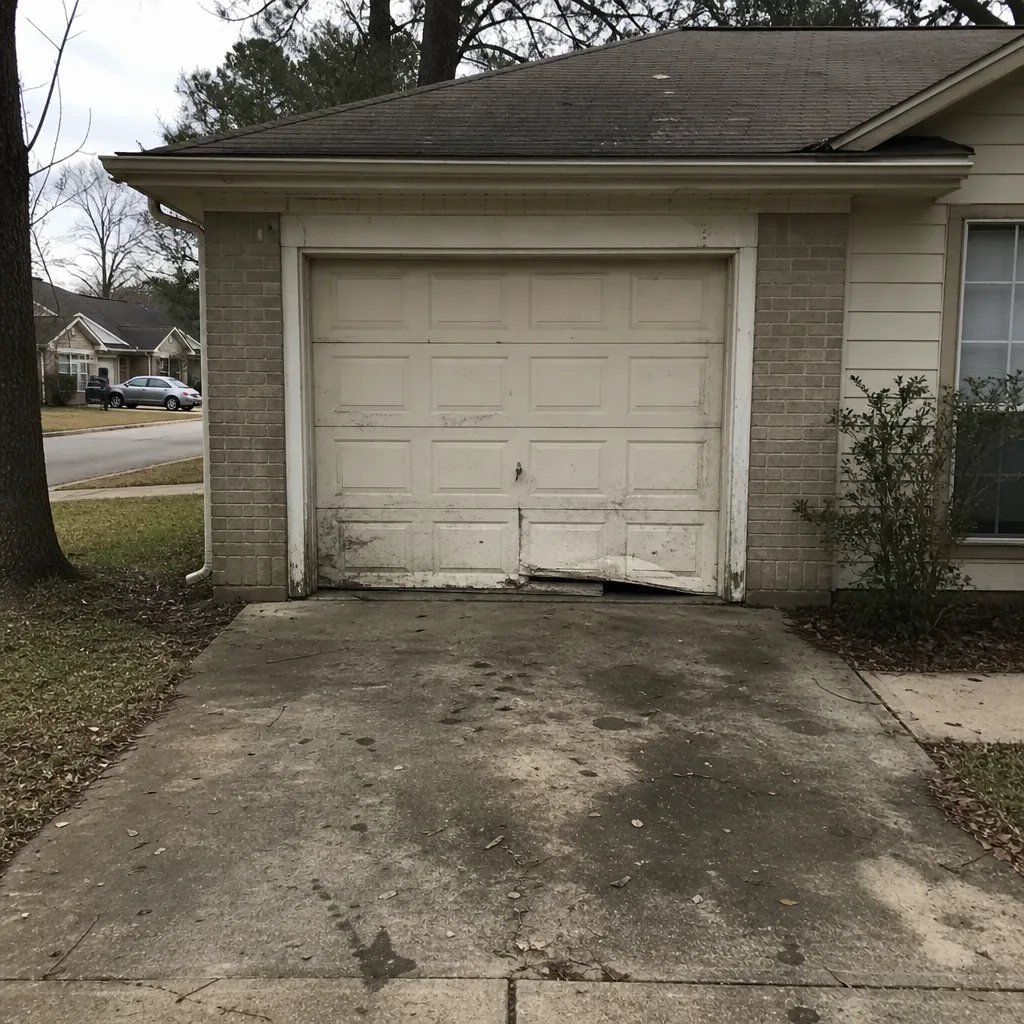 Before
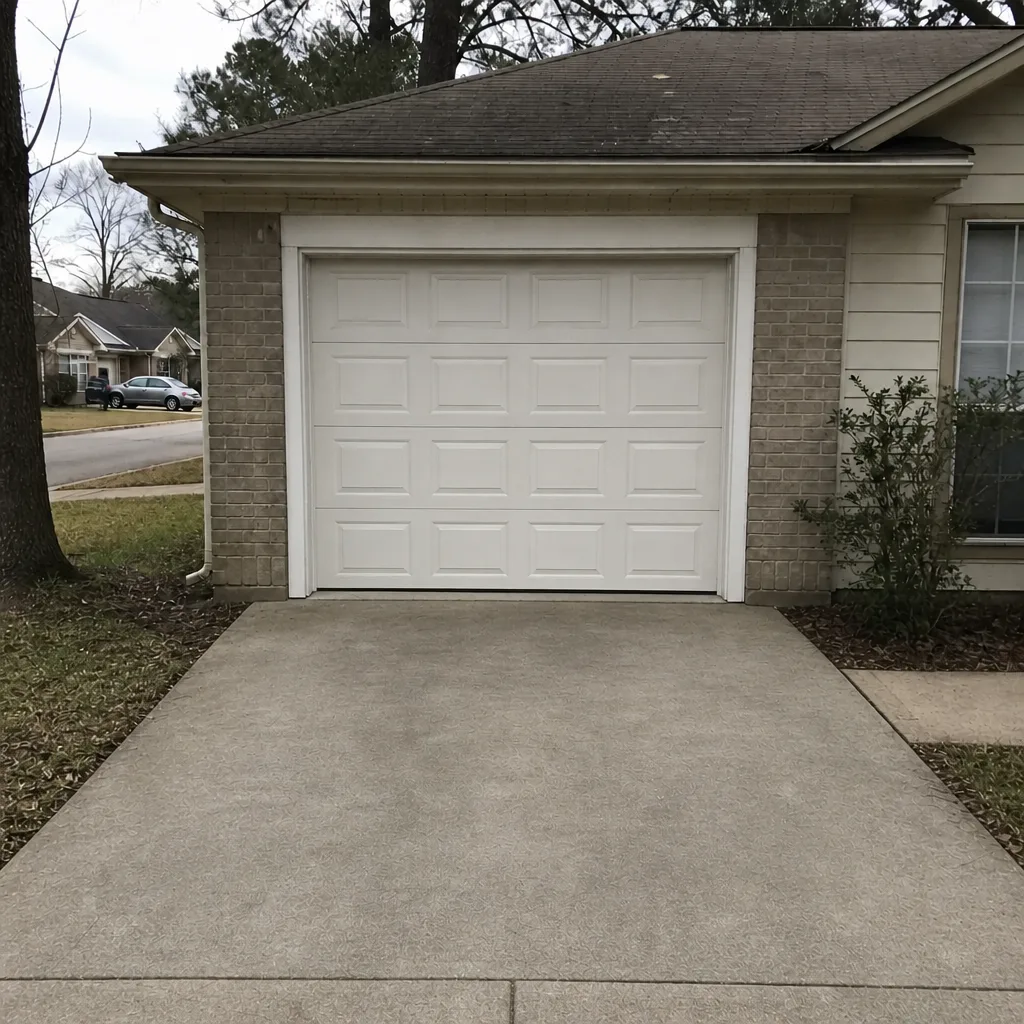 After
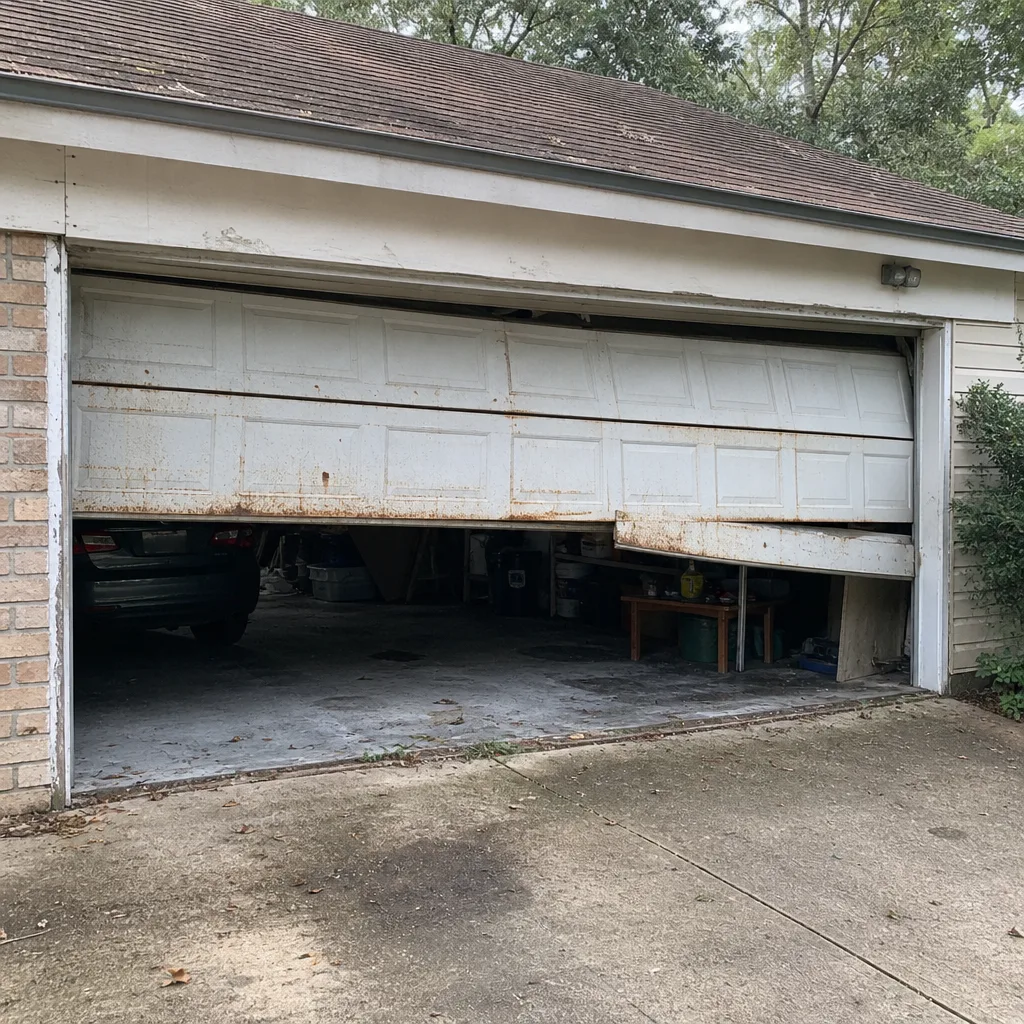 Before
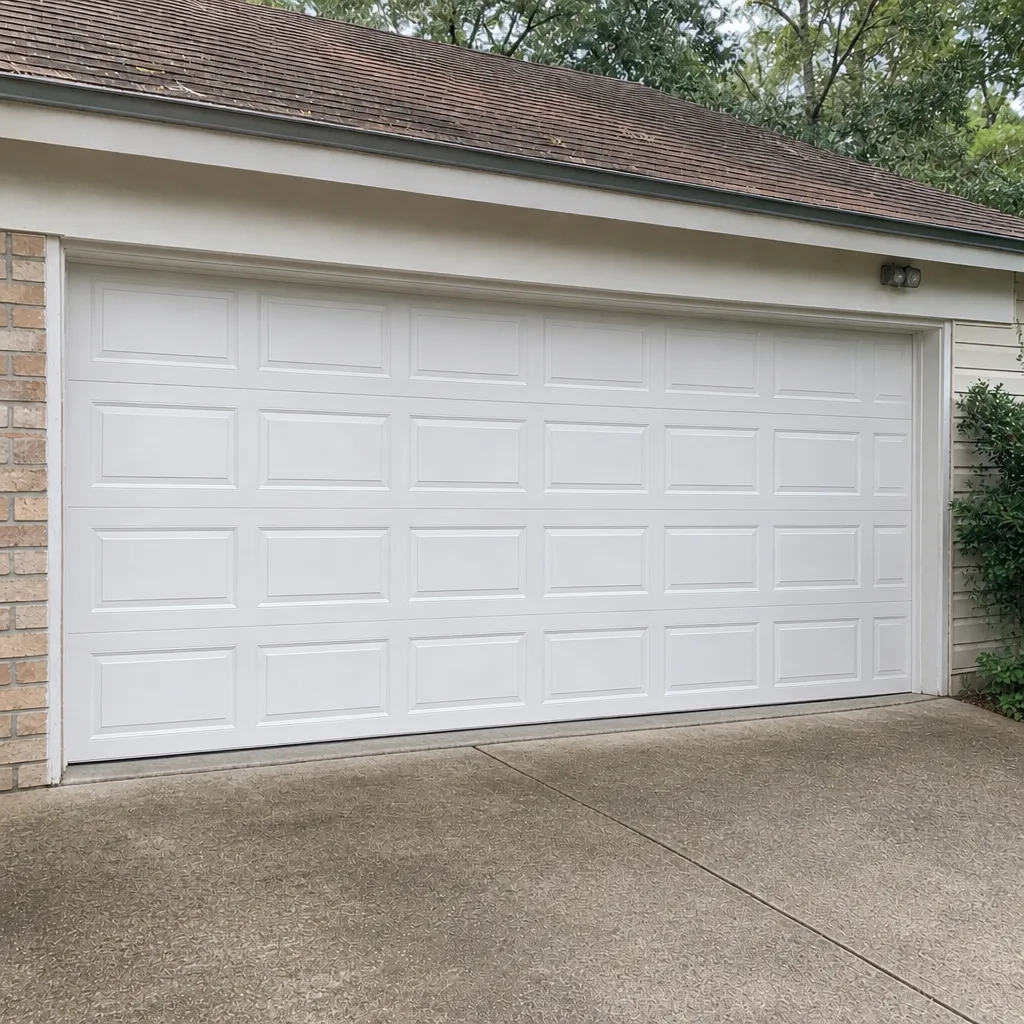 After
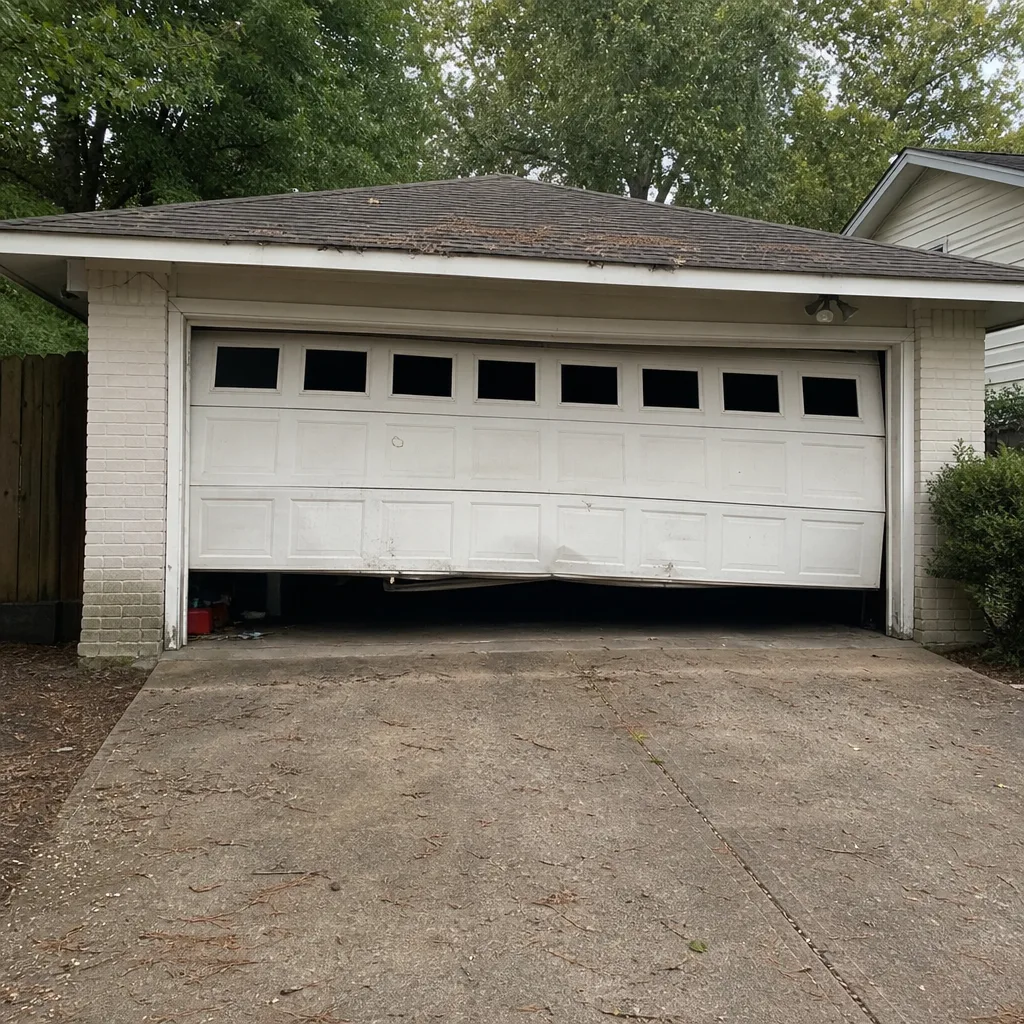 Before
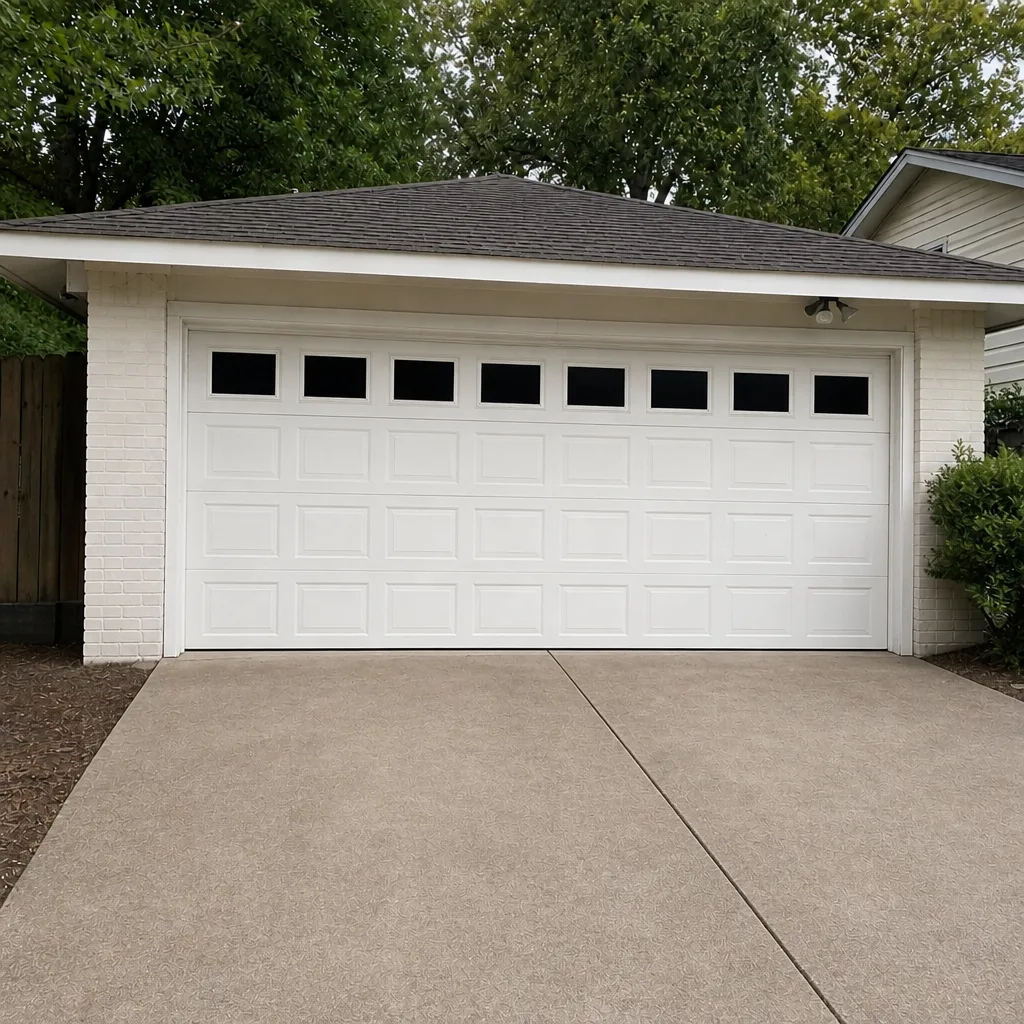 After
When to Call a Professional
Some problems are safe to watch and some need a call today. Call a professional immediately if a spring has snapped (the door will be unsafe to lift), a cable is frayed or hanging, the door is off its track, or the door won’t reverse when tested. These are the repairs where DIY risks injury, and they’re the ones where a trained technician with the right parts gets it done in one visit. For less urgent issues – a noisy door, a remote that’s stopped working, a bottom seal that’s cracked, an opener that’s acting up – you can schedule a visit and get it handled before it turns into an emergency. Conroe Garage Door Repair Pros offers free estimates in Conroe – call (877) 362-9173. We answer 24/7. Fast dispatch from 7am to 7pm, Sunday through Friday.
Frequently Asked Questions
Spring repair is priced per spring, matched to the door’s weight and height, and a matched pair costs roughly twice a single spring. The exact figure depends on your door, so the written estimate you receive is the final price. Call (877) 362-9173 for an exact quote – estimates are free.
Same-day service is often available for a door that won’t open or close, depending on the schedule and the part needed. We answer 24/7 and dispatch Sunday through Friday, 7am to 7pm. Call (877) 362-9173 and we’ll get you on the schedule.
No. The price is quoted and agreed before any work starts, so the written estimate you approve is the price for the job. If we find something the estimate didn’t cover, we discuss it with you first and you decide before anything is done.
The local professionals we connect you with are licensed and insured as their state requires. We’re a single-trade garage door company, so every technician on every job works on garage doors specifically.
We service LiftMaster, Chamberlain, Genie, Clopay, Amarr, Wayne Dalton, Craftsman, and Raynor systems, including the Wi-Fi and smart-home openers from LiftMaster and Chamberlain that need brand-specific diagnostics. If your opener is a LiftMaster, Chamberlain, or Genie, we know that system.
Repair makes sense when the door is structurally sound and one part has failed. Replacement is the better call when panels are cracked or rusted, the door sags or won’t balance, or several parts are failing at once. We’ll tell you which side you’re on in the written estimate. Call (877) 362-9173 – estimates are free.
The Bottom Line
A garage door is a system, and most failures come from springs, cables, or openers rather than the door itself. Springs should always go to a trained specialist. Openers need brand-specific knowledge, so LiftMaster, Chamberlain, and Genie systems are best handled by someone familiar with them. In Conroe, heat, humidity, and clay soil add wear to seals, hardware, and alignment, so a yearly look at the balance and seals saves money. Repair if the door is sound and one part failed; replace if several parts are going or you want insulation. Either way, the price is quoted and agreed before work starts, and the written estimate is the final price. If you’re not sure which side of that line you’re on, one call settles it. Call (877) 362-9173 for a free estimate. We answer 24/7. Fast dispatch from 7am to 7pm, Sunday through Friday. You can also start with Conroe Garage Door Repair Pros for the full service overview.
Written by the team at Conroe Garage Door Repair Pros.